If you’re planning a high-rise in Ontario, here’s the decision that can make or break your pour schedule: do you use a boom pump truck, or do you install a placing boom?
Both place concrete. Both use a hydraulic boom. But on high-rise construction, they play totally different roles. Pick the wrong one (or pick the right one too late), and you can end up with slow pours, heavy crane pressure, and constant plan changes.
At Premier Concrete Pumping, we support high-rise projects from early slabs to long-duration tower work. In this guide, you’ll learn the difference between a boom pump and a placing boom, when to use each one, and how to plan the switch the right way.
Quick Answer
A boom pump is a truck-mounted pump used when you can still reach the pour with a mobile boom and you want fast setup and flexibility. A placing boom is a fixed, building-mounted boom fed by a ground pump through a vertical pipeline once the project is too tall (or too demanding) for mobile reach.
If you’re new to pumping and want the basics first, start here: What is concrete pumping?
What Is a Boom Pump?
A boom pump is a concrete pump mounted on a truck. It drives onto site, sets outriggers, unfolds the boom, and places concrete where you need it. It’s one of the fastest ways to place concrete because you’re not dragging long lines across the site.
Boom pumps are a strong fit for foundations, slabs, podium decks, parking structures, and early high-rise floors. If you’re comparing pumping styles on smaller sites too, this guide helps: Boom pump vs line pump.
Want a quick way to choose a truck size? Use our Boom Pump Selector or review Boom Pump Truck Rentals in Ontario.
What Is a Placing Boom?
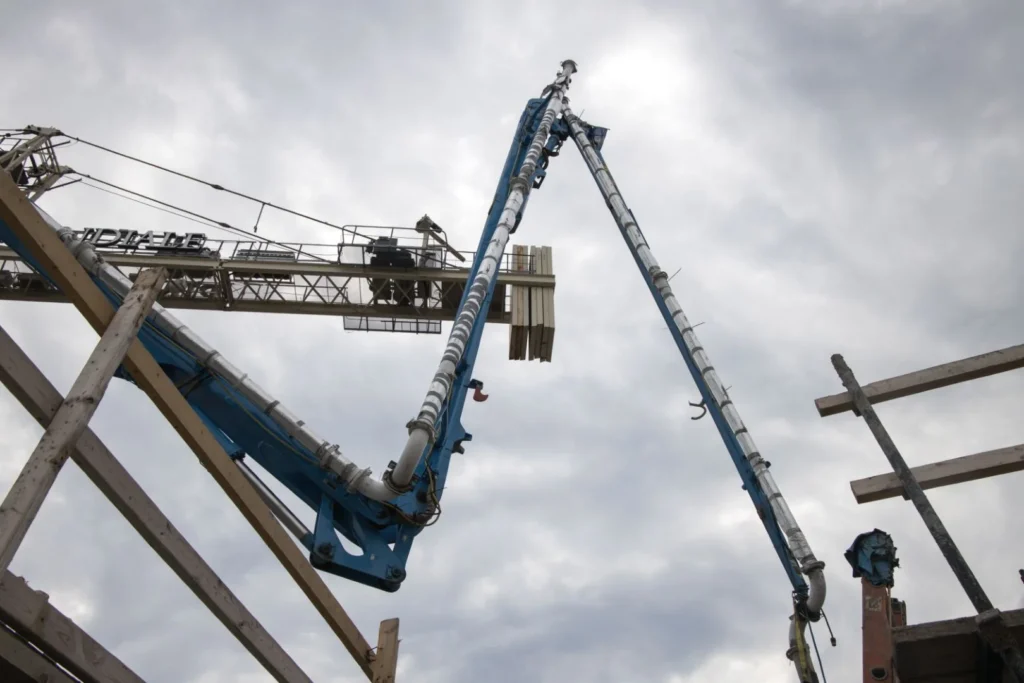
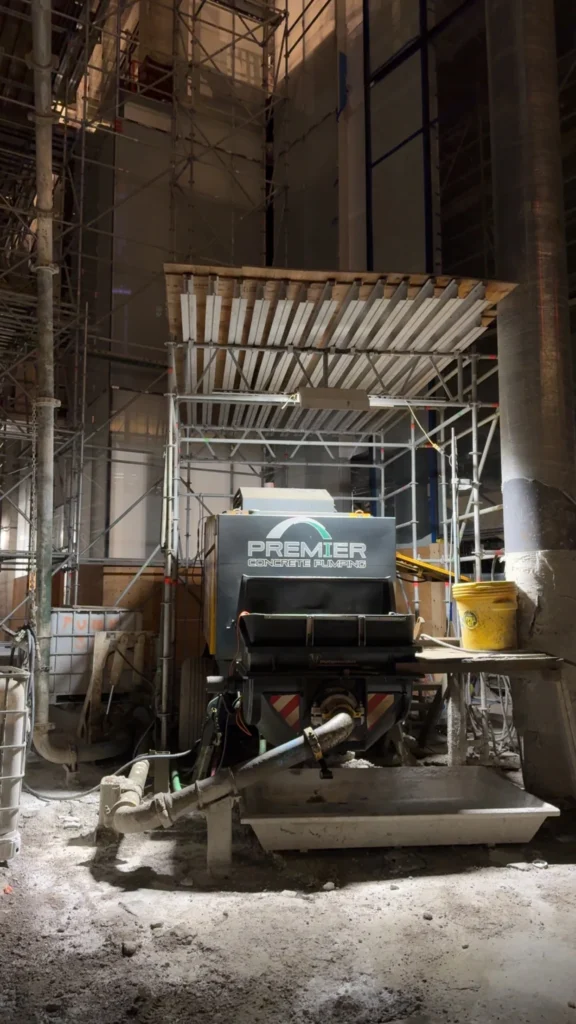
A placing boom is a stationary boom system used on high-rise construction once mobile boom pumps can’t reach the pour safely or efficiently. Instead of living on a truck, it’s installed on the building (usually tied into the core) and fed by a ground pump through a vertical steel pipeline.
The big advantage is that it can stay on the project as the building climbs. On true tower builds, it’s common for placing booms to stay installed for long stretches of the project.
If you want a full “when to install it” breakdown, read: When do you need a placing boom for a high-rise project?
Key Differences at a Glance
| Feature | Boom Pump Truck | Placing Boom |
|---|---|---|
| Mobility | Truck-mounted and mobile | Fixed to building core / structure |
| Best For | Foundations, slabs, podiums, early high-rise | Mid-to-upper floors on high-rise towers |
| Height Limits | Limited by boom reach + site access | Climbs with the building (via planned moves) |
| Setup Style | Drive in, set, pour, clean out, leave | Crane install + mast/core tie-in + vertical pipeline |
| Time on Site | Short-term / daily visits | Long-term (months to years) |
| Why GCs Use It | Fast mobilization and flexibility | Consistent vertical placement as tower climbs |
When a Boom Pump Is the Right Choice
A boom pump is usually the right call when you can still reach your pour location safely and you want speed. It’s the “get in, get poured, get out” option that keeps things moving without major site infrastructure changes.
- You’re within reach. Your pour points are still reachable with a mobile boom (and you have room to set outriggers).
- You need flexibility. The pour locations change often, and you don’t want fixed infrastructure tied into the building.
- You’re earlier in the build. You’re pouring footings, walls, podium slabs, ramps, or early floors.
- You want fast setup and cleanup. Most boom pump work is built around daily mobilization.
If you’re not sure what “within reach” really means, this is the guide that clears it up: How far can a boom pump reach?
When a Placing Boom Becomes the Better Choice
A placing boom becomes the better choice when your tower climbs to the point where mobile boom pumping becomes inefficient or impossible. On high-rise work, the biggest issue is simple: the building keeps going up, but the boom truck does not magically get taller.
- You’re past practical mobile reach. Even your largest boom can’t reach upper floors safely.
- You need steady output. High-rise work often needs consistent production, floor after floor.
- You want less crane pressure. Once installed, your concrete placement doesn’t have to fight for crane time.
- The project is long. Towers are not a one-week job, and your placement system needs to match that reality.
- The floor plate is wide. Maneuverability and reach across the deck matters.
If you want the full planning view (including setup), read: Pump setup for high-rise concrete projects.
Setup Differences That Actually Matter to Your Schedule
This is where a lot of competitors write fluffy content. Here’s the real difference:
A boom pump truck is a fast daily mobilization. A placing boom is a planned installation that becomes part of the building.
Boom pump setup
- Truck arrives and positions for reach
- Outriggers set
- Boom unfolds and places concrete
- Cleanout and demobilize
If you’re trying to make sure your day-of pour goes smoothly, use: What to expect on the day of a concrete pump pour and How to prep your site for concrete pumping.
Placing boom setup
- Crane install and mounting plan
- Mast/core tie-in or approved mounting method
- Vertical steel pipeline installed from ground to boom
- System grows upward as the tower grows
Because placing boom setups are heavier and more complex, the earlier you plan it, the less it disrupts your schedule.
Production, Volume, and Why High-Rise Is Different
High-rise pours are a different world than most residential or small commercial work. You’re often pushing large daily volumes, and you need a placement plan that can keep pace with formwork cycles and concrete delivery windows.
Boom pumps handle early stages well because they’re fast and flexible. Placing booms are built to carry the project once vertical height and production demand go beyond what mobile reach can do.
Mix and line planning also matters more on high-rise. If you want a practical guide that helps avoid problems, read: Choosing concrete mix and pump line size.
Safety Differences on High-Rise Jobs
Boom pump safety is mostly about ground setup, overhead clearance, and keeping the work zone controlled.
Placing boom safety adds a new layer because you’re working at height and operating on unfinished floors with multiple trades nearby. The risk isn’t just the equipment — it’s also the environment.
If your team needs to align on safety expectations, use: Health & Safety and Guide to safe hose routing.
Downtime Planning: What Happens If Equipment Fails?
On a tower, downtime is expensive. The right partner doesn’t just show up with equipment — they plan for uptime.
If you want to see how we think about breakdowns and how to reduce risk on big pours, read: What happens if concrete pump equipment fails during a pour?
You can also reduce risk by planning line layout and flow properly. This helps avoid common stoppages: How to prevent concrete line blockages.
Cost Differences (Without Getting Into Exact Prices)
Boom pump truck work is commonly billed in an hourly style (often with minimums), because the equipment is mobilized and demobilized for a single pour or a single day.
Placing boom projects are typically structured differently because the system stays on site longer, uses a vertical pipeline, and supports the project over time. Volume forecasting becomes a bigger part of planning and pricing.
If you want a general explanation of how pumping is billed in different situations, this helps: How much does a concrete pump charge per hour?
Can You Use Both on the Same High-Rise?
Yes — and most projects do.
A common approach is to use boom pumps for the early floors and podium work, then transition to a placing boom once the tower reaches the point where mobile reach is no longer practical.
If you’re planning that transition, this is the timing guide: When should you book a concrete pump?
The High-Rise Decision Checklist
If you want a fast way to decide, use this checklist:
- Still within mobile reach? Start with a boom pump truck.
- Pour points climbing fast? Start planning a placing boom early.
- Wide floor plate? Maneuverability matters more — equipment choice matters more.
- Large daily volume? You need a system that can keep pace.
- Crane time tight? A placing boom can reduce bucket dependency.
- Multi-season schedule? Plan for weather impacts on pumping: Cold weather pumping and Best temperature to pour concrete.
Common Mistakes We See on High-Rise Pump Planning
- Waiting too long to plan the placing boom. Availability and setup coordination are real constraints.
- Not planning vertical pipeline routing early. Late changes cause delays and extra site headaches.
- Ignoring mix + line planning. It often shows up as slow flow or blockages later.
- Forgetting cleanup logistics. Good cleanup planning keeps your site cleaner and your pour turnover faster. See: Safe cleanout procedures.
What to Do Next
If you’re deciding between a placing boom and a boom pump truck for your high-rise, the next step is simple: match the equipment to your project stage.
If you’re still early and within reach, explore our boom pump truck rentals. If you’re planning the tower climb, review high-rise pump setup and when you need a placing boom.
When you’re ready to talk through drawings and volume, you can reach us here: Contact Premier Concrete Pumping. You can also browse our equipment to see what we run on Ontario jobs.
FAQ
What is the biggest difference between a placing boom and a boom pump truck?
A boom pump is truck-mounted and mobile, so it’s best when you can still reach your pour from the ground with a hydraulic boom. A placing boom is fixed to the building and fed by a vertical pipeline, so it’s best once the building is too tall (or too demanding) for mobile reach.
When should a high-rise switch from boom pumps to a placing boom?
Most projects switch once the tower climbs beyond the safe and practical reach of even the largest boom truck. The smart move is to plan the placing boom before you hit that point, so installation and pipeline setup don’t disrupt your schedule.
Do you still need boom pumps after a placing boom is installed?
Sometimes, yes. Many high-rise projects use boom pumps for early stages and specialty pours, then use the placing boom as the main system for upper floors. The exact approach depends on access, pour type, and sequencing.
Is a placing boom only for condos and towers?
Placing booms are most common on tall buildings because they solve the height problem. They can also make sense on large structures where steady placement and reduced crane pressure matters, but they’re mainly a high-rise tool.
How do you avoid line blockages on high-rise pumping?
It starts with good planning: the right line size, clean routing, and a pumpable mix that matches the job. This guide explains the practical steps that help prevent stoppages: How to prevent concrete line blockages.
How far in advance should you book placing boom work?
As early as you can, ideally during planning. Placing boom projects require coordination for installation, vertical pipe setup, and long-duration scheduling, so last-minute requests can be tough to accommodate.
How do boom pump pricing and placing boom pricing differ?
Boom pump truck work is often billed hourly with minimums because it’s a daily mobilization. Placing boom projects are commonly structured around longer duration and volume forecasting. If you want the general billing breakdown, start here: How concrete pumping charges work.
What should I send you to recommend the right setup?
The fastest way is to send drawings, floor plate details, and expected volumes so we can match the equipment to your stage and schedule. If you’re ready, use: Contact Premier Concrete Pumping.