Pouring concrete efficiently is only half the job—the other half is ensuring the site is safe and the material reaches the pour point without incident. For any project manager in Southern Ontario, understanding how to route concrete pump hose lines safely is crucial.
At Premier Concrete Pumping, we combine our advanced
equipment and expert operators to choose the best path every time. This guide breaks down the safest and most efficient routing practices for both boom and line pump applications on your job site. If you’re planning a tricky setup, it also helps to review our guide on
concrete pump setup for complex job sites before pour day.
1. Who Has the Final Say on the Hose Path?
Clarity on command is essential for safety and efficiency. While the
Site Superintendent or
General Contractor generally plans the pump’s staging area, the final authority on the hose route rests with our operator.
Boom Pump Routes
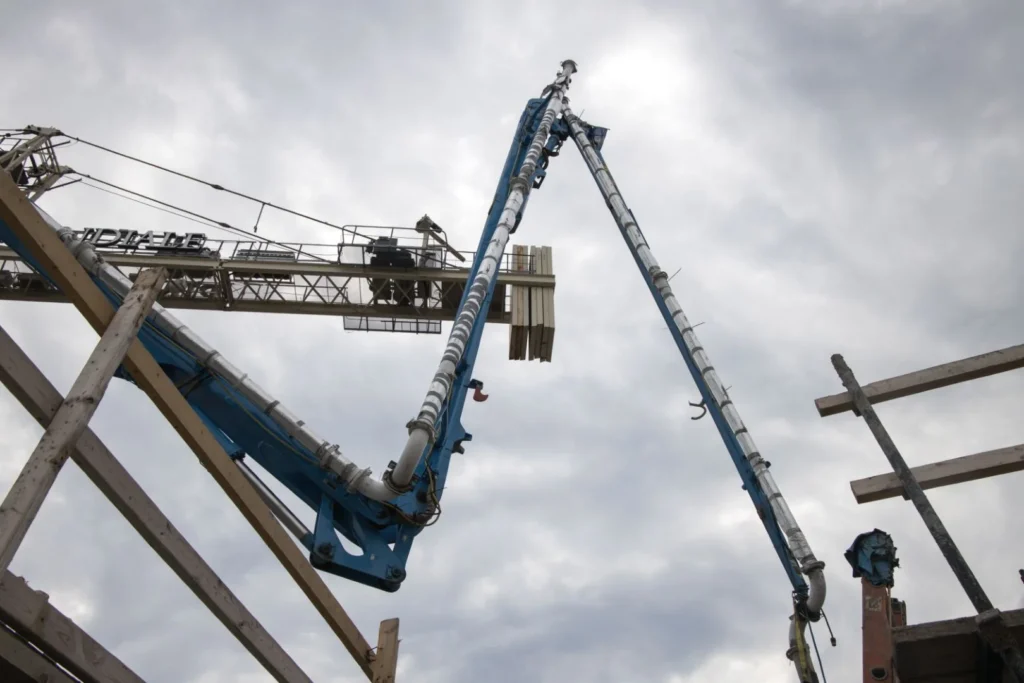
The path for a boom pump is generally more straightforward, as the route is dictated by the pump’s physical capabilities and the outrigger setup.
- The operator’s priority is a safe and stable setup area, which directly determines the boom’s reach. There is limited “play” once the boom is extended.
- Internal Link: Review the outrigger requirements for your chosen pump on our Our Equipment page before site prep.
- Internal Link: Not sure what boom size you need? Use our Boom Pump Selector to match reach and site access.
Line Pump Routes
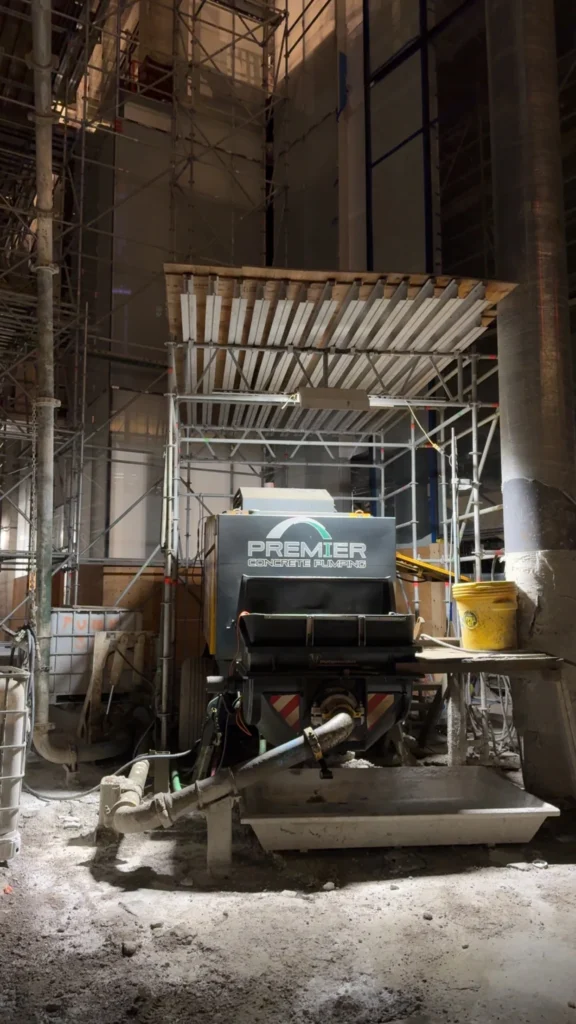
For line pumps, the route is much more flexible, often requiring hundreds of feet of hose laid across the ground. If you want a deeper breakdown of hose, accessories, and best-use scenarios, see our
trailer and line pump services page.
| Authority |
Responsibility |
Rationale |
| Site Crew |
Defining the final pour point. |
Crew knows exactly where the concrete is needed. |
| Premier Operator |
Finalizing the hose path. |
Operator will optimize the route to cut down on line, minimize connections, and avoid sharp turns, maximizing the pump’s efficiency (and your investment). |
Ultimately, a Premier operator will always choose the most efficient, safest path, leveraging their experience to prevent blockages or run-ins.
2. Technical Limitations: Max Distance and Vertical Pours
You can push concrete further than most expect, but logistics require planning.
Maximum Horizontal Distance
For line pumps, efficiency starts to decline when the line exceeds
300 feet.
- Impact: At and above the 300-foot mark, the friction inside the line causes a noticeable slowdown in the pump’s maximum output. While the concrete can still be moved, the pour rate will not be at the pump’s maximum capacity.
- Internal Link: Line size, mix, and distance all work together. For a practical breakdown, read Choosing Concrete Mix and Pump Line Size.
Handling Vertical Runs
Pumping vertically does not significantly affect the pour rate, but it requires specialized stabilization to manage the weight and pressure.
| Vertical Setup |
Stabilization Method |
Typical Application |
| Mezzanine/High Walls |
Stand Pipe |
We utilize a reinforced stand pipe that holds an elbow (L-shape) from the ground. This pipe stand provides the necessary stability for vertical pressure runs. |
| Scaffolding/Towers |
Strapping/Clamps |
The vertical line is often strapped or clamped securely to the existing scaffolding or structure to prevent movement and ensure the line remains straight and stable. |
3. Routing Through Structures (Windows, Garages, & Egress)
One of the greatest advantages of a line pump is its ability to route concrete inside a structure.
| Scenario |
Routing Capability |
Key Requirement |
| Basement Pours |
Yes—Through Windows |
The standard 4″ diameter hose can fit through most egressed windows or foundation openings, eliminating the need to haul concrete down stairs. |
| Garages & Interior |
Yes—Doorways |
We can easily route through garages, existing door frames, or even up and out new window frames on newer builds. |
| Upper Floors |
Yes—Vertical & Inward |
Concrete can be pumped vertically and routed through open window frames to reach second storeys or roof pads. |
4. Exclusion Zones & Safety on Active Sites
A hose line under pressure is an active hazard. Clear safety protocols are non-negotiable. For an overview of how we approach jobsite risk, training, and standards, see our
Health and Safety page.
The Danger Zone
- Exclusion Zone: While the rigid metal/steel pipes along the route can be crossed over (with caution), the flexible end hose is the true “Danger Zone.”
- Protocol: The finishing crew members actively handling the end hose must wear appropriate PPE, be trained on safe handling, and be prepared for the line’s kickback, especially during start/stop cycles.
Navigating Obstacles
- Sharp Corners: We never force a flexible hose around a tight, sharp corner or kink it. We use a 90-degree steel elbow connection to create a safe, controlled turn, allowing the concrete to flow smoothly and safely continue its route.
- Public Areas: If routing over public sidewalks or active roadways, the area must be secured using clear pylons, barricades, or temporary fencing to create a strict exclusion zone. The line must also be properly padded to prevent damage to the surface below.
5. Handling the Line Weight and Support
A full concrete line is extremely heavy and must be supported correctly to avoid structural failure or injury.
| Situation |
Safety Measure Used by Premier |
Crew Responsibility |
| Supporting the Line |
Padding and Metal Pans |
We use specialized metal pans and protective padding to cushion the hose where it rests on critical or delicate surfaces (e.g., driveways, finished floors). |
| Moving the Line |
Operator Assistance (Discretionary) |
Our operator’s primary job is to stand by the pump. Moving the line is officially the responsibility of the finishing crew on site. Our operators may assist occasionally, but the crew must be prepared to handle the line safely. |
Need Expert Routing Advice for a Complex Pour?
If your project involves extreme reach, multiple bends, or challenging access,
Speak With Dispatch today. We’ll pre-plan the safest, most efficient route for your next pour.
Want to tighten up planning even further? Read our full guide to