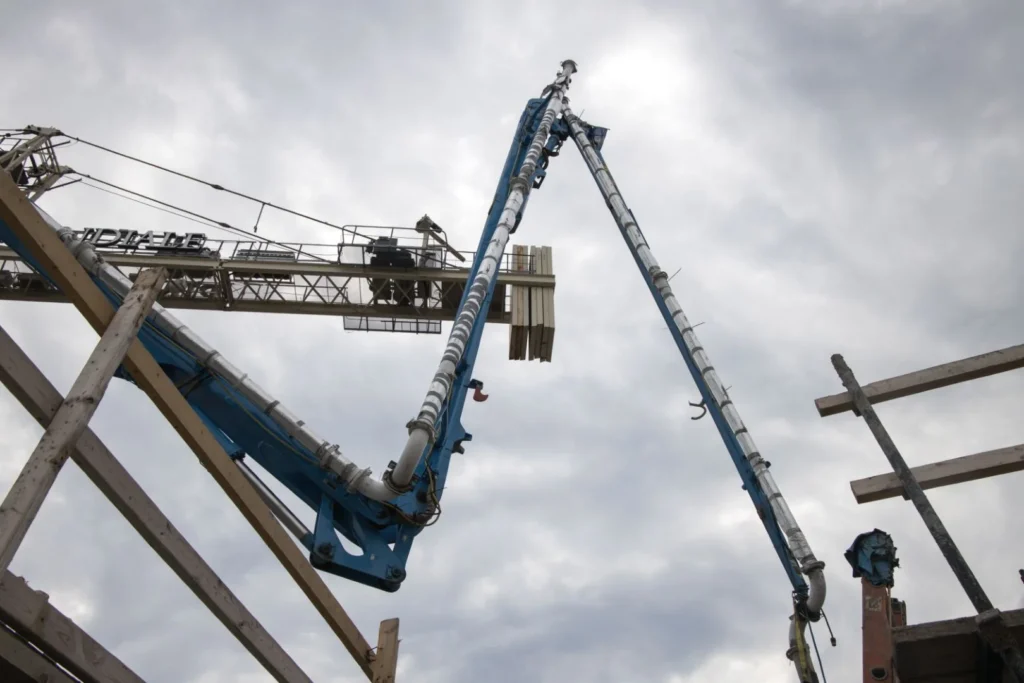
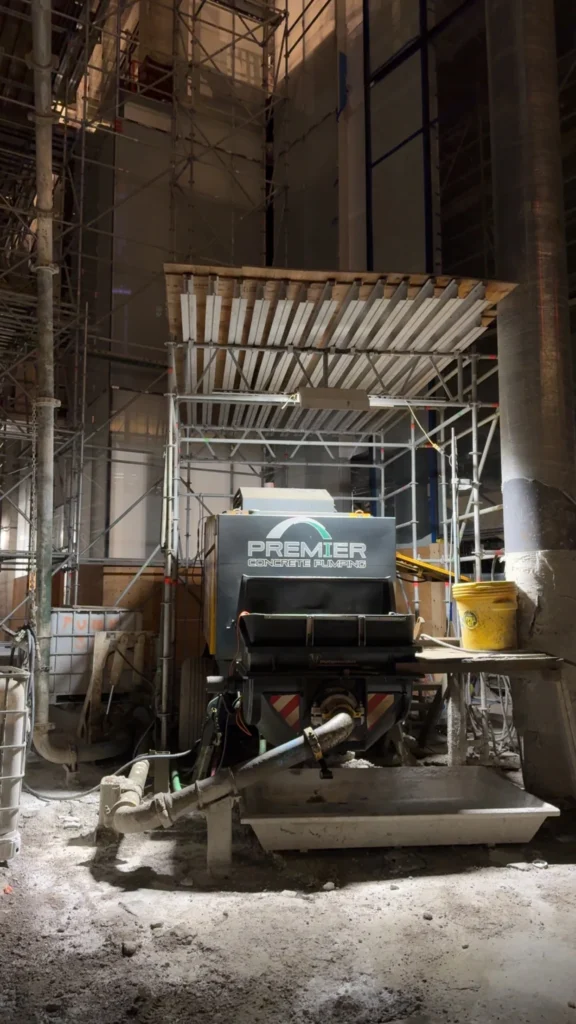
One of the most common questions we get is simple: how much does a concrete pump charge per hour? The short answer is that concrete pumping is typically priced by time, but the actual rate depends on your job setup, access, pump type, and how prepared the site is.
At Premier Concrete Pumping, we price pumping based on the real conditions of your pour, not a generic number. This article explains how concrete pumping hourly charges work in Ontario, what factors affect your cost, and how to avoid paying more than you need to.
How Concrete Pumping Pricing Works
Concrete pumping is usually charged by the hour, starting when the pump is set up and ready to operate. Most jobs include a minimum number of hours, with additional time billed if the pour runs longer.
Unlike material pricing, pumping costs are tied to time and logistics. The faster and smoother your pour goes, the more value you get from the pump.
If you’re new to pumping, it helps to first understand what concrete pumping is and how it works.
What affects the hourly cost of a concrete pump?
Several factors determine how much time — and therefore cost — is involved in your pour. Here’s what matters most.
| Factor | Why It Matters |
|---|---|
| Pump type | Boom pumps and line pumps have different operating costs and setup requirements. |
| Access and setup | Tight or restricted access can increase setup time and complexity. |
| Pour volume | Larger pours typically move faster once pumping starts. |
| Concrete delivery timing | Gaps between trucks can extend pump time. |
| Site readiness | Incomplete forms, missing steel, or delays add billable time. |
Many cost overruns come from delays that happen before concrete even starts flowing. That’s why preparation is just as important as pump selection.
For help planning access and staging, see concrete pump setup for complex job sites.
Boom Pump vs. Line Pump hourly considerations
Not every job needs the same type of pump. Choosing the right one can significantly affect how long the pump is on site.
| Pump Type | Best For | Time Impact |
|---|---|---|
| Boom pump | Large pours, foundations, elevated placements | Faster placement once set up |
| Line pump | Basements, additions, tight access pours | Longer hose routing, slower placement |
Boom pumps typically place concrete faster, which can reduce total hours on large pours. Line pumps may take longer to place but are often the only option where access is limited.
You can explore both options on our trailer and line pump services and equipment pages.
Minimum hours and additional time
Most concrete pumping jobs include a minimum charge. This covers equipment mobilization, setup, operation, and cleanup.
Additional time is charged if:
- Concrete trucks arrive late or unevenly spaced
- The pour stops due to site delays
- Forms or reinforcement are not ready
- Weather causes interruptions
Reading best practices for pouring concrete in Ontario can help reduce avoidable downtime.
Why cheaper hourly rates can cost more
Focusing only on the lowest hourly rate can be misleading. A slower pour, poor setup, or inefficient routing can increase total time and raise your final cost.
We focus on efficiency — helping you finish the pour as quickly and cleanly as possible. That includes:
- Pre-planning hose routes
- Using the correct line size
- Coordinating with your crew
- Maintaining steady flow
If you’re working on foundations, slabs, or floors, these articles connect directly: block foundation vs poured concrete foundation, concrete slab vs concrete pad, and how to pour a concrete floor slab.
How to reduce concrete pumping time
The easiest way to control pumping cost is to reduce unnecessary time on site. Here’s what consistently helps.
| Preparation Step | Why It Helps |
|---|---|
| Forms complete and braced | Prevents stop-and-go pumping |
| Rebar and mesh installed | Avoids waiting during placement |
| Clear access path | Speeds up hose routing |
| Consistent truck scheduling | Keeps concrete flowing |
If access is tight, our residential concrete pumping and ICI concrete pumping services are designed to minimize setup delays.
Do concrete pumps charge by the hour or by volume?
Concrete pumping is typically charged by time, not volume. The faster and smoother the pour, the better the value.
Does the hourly rate include the operator?
Yes. Pumping includes a trained operator as part of the service.
Do delays count as billable time?
Yes. Time on site is billable even if pumping pauses due to site or delivery delays.
Is a boom pump faster than a line pump?
Generally, yes — especially for larger pours. However, access constraints may require a line pump.
Can you help estimate how long a pour will take?
Yes. We help plan the setup and estimate time based on your site and pour size. You can also start with our boom pump selector.
Do you pump for residential and commercial jobs?
Yes. We provide residential, ICI, and infrastructure concrete pumping across Ontario.