Not sure if your project needs a concrete slab or just a pad? In this article, we break down the real difference between the two, when to use each, and what it means for your concrete pumping setup. Whether you’re building a house foundation or setting up a hot tub in the backyard, this guide will help you make the right call.
What is a Concrete Slab?
A concrete slab is a large, flat, and reinforced mass of concrete typically poured in a single operation. These are foundational structures found in:
-
Custom homes
-
Commercial warehouses
-
School floors
-
Parking garages
-
Water treatment facilities
Key Characteristics:
-
Area: Usually starts at 60m² and can go up to several hundred square meters
-
Volume: Large concrete pours requiring efficient placement
-
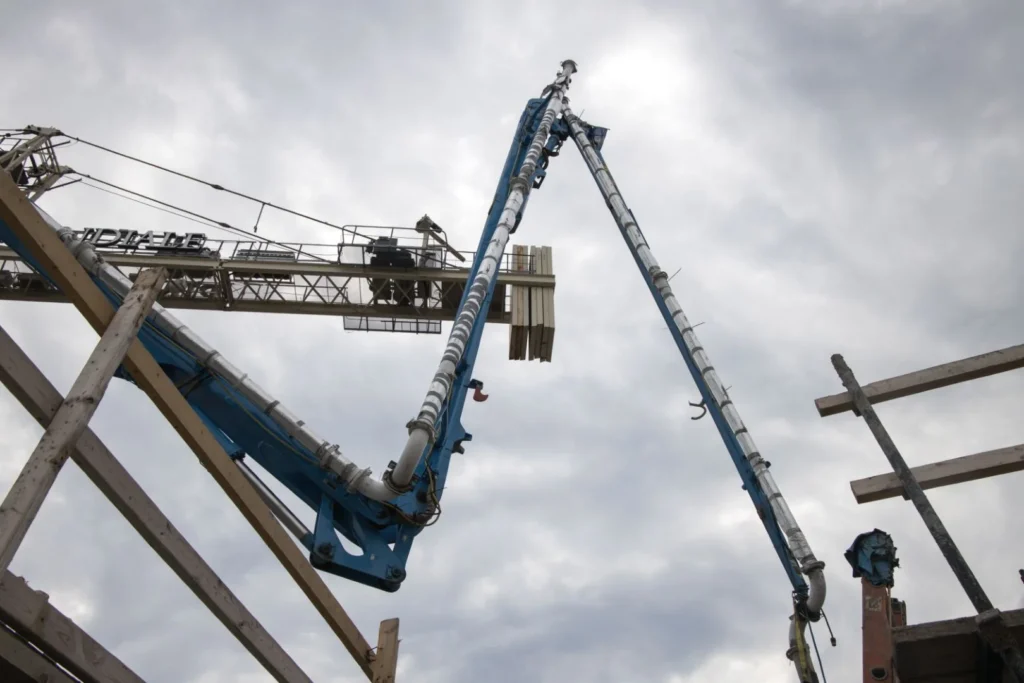
Pump type: Requires overhead boom pumps ranging from 20m to 65m
-
Reinforcement: Typically includes rebar or mesh grids
-
Finishing: Depends on project requirements (power trowel, broom finish, etc.)
Looking to pour a large foundation? Check out our Boom Pumping Services
What is a Concrete Pad?
A concrete pad is essentially a small slab, used for lightweight or isolated applications. It’s commonly used in residential and light commercial jobs, such as:
-
Backyard sheds
-
Hot tub bases
-
Support posts for decks
-
Small outdoor storage
-
Air conditioner platforms
Key Characteristics:
-
Area: Typically ranges from 2m² to 60m²
-
Volume: Small concrete pours, often manageable with a line pump
-
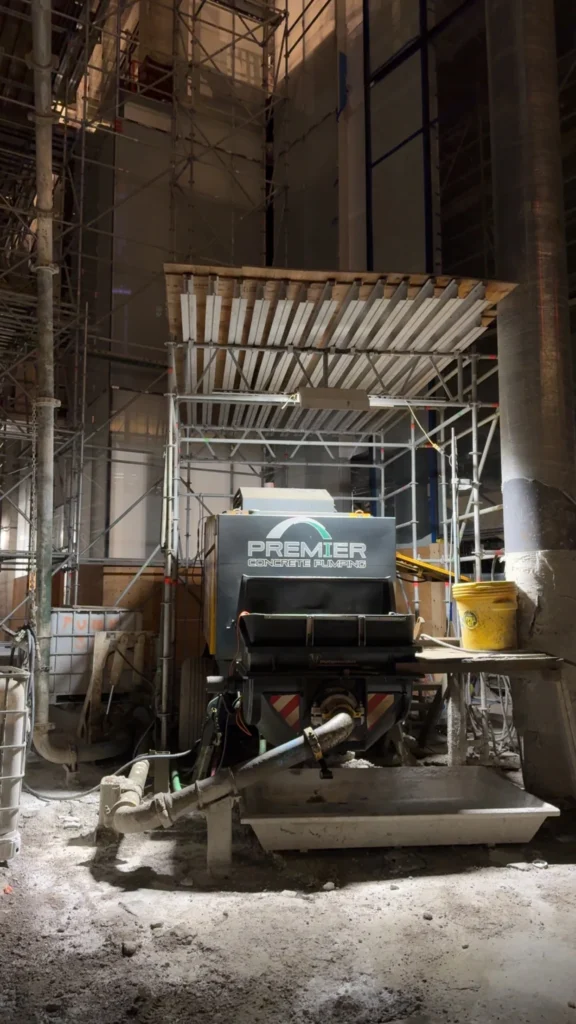
Pump type: Usually a trailer/line pump, or small boom (31m to 47m)
-
Reinforcement: Often not required—framing is usually enough
-
Finish: Standard broom or trowel finish
For small-to-medium residential jobs, consider our Line Pumping Services
Slab vs Pad: At-a-Glance Comparison
| Feature | Concrete Slab | Concrete Pad |
|---|---|---|
| Size Range | 60m² and up | 2m² to 60m² |
| Common Uses | Foundations, warehouse floors, schools | Hot tubs, sheds, deck posts |
| Reinforcement | Yes (rebar/mesh) | Usually none |
| Pump Type | Boom (20m–65m) | Line or Boom (31m–47m) |
| Access Requirements | Large vehicle setup, outrigger space | More flexible, but tighter access may still require boom |
| Volume of Concrete | High | Low |
| Cost | Higher due to volume & complexity | Lower but varies with site access |
Real Examples from Our Job Sites
1. Concrete Slab – Commercial Project
-
Type: Warehouse flooring
-
Area: 100m²
-
Pump: 65m overhead boom
-
Reinforcement: Full mesh grid
-
Result: Poured in one smooth pass, perfect finish, minimal cold joints
2. Concrete Pad – Hot Tub Base
-
Type: Residential backyard
-
Area: 12m²
-
Pump: 31m boom pump (line pump blocked by landscape features)
-
Reinforcement: None – just framed
-
Result: Clean pour, perfect for setting equipment base
Choosing the Right Pump for the Job
Use a Boom Pump if:
-
The pour is over 60m²
-
You need to clear trees, fencing, or landscaping
-
Setup time and speed matter
-
The area is far from where the truck can be parked
-
You’re working on a job where precision and speed are critical
Use a Line Pump if:
-
The pour is under 60m²
-
You have flexible access points
-
Budget is a key concern
-
You’re familiar with line pump setups
We help you figure this out. Contact our team and we’ll match the right pump to your job site.
What Contractors Often Overlook
Choosing between slab vs pad isn’t just about size. It’s also about access logistics and site conditions. For example:
-
Outriggers: Boom pumps need space to deploy stabilizing outriggers.
-
Height clearance: Trees, hydro lines, and fencing affect equipment positioning.
-
Terrain: Uneven ground may prevent trailer pump access.
-
Mix design: Low-slump or fiber-reinforced mixes may require specific pumps and tip hose setups.
We provide tip hose accessories, vibrators, and all cleanout gear on-site. See our full equipment list
Why We Sometimes Send a Boom for a Pad
At Premier Concrete Pumping, we may charge for a line pump but show up with a boom pump—why?
-
Availability: If the line pump is booked, we’ll send the next best option
-
Efficiency: A boom might speed up the job with less labour
-
Access issues: Tight landscaping or fences may block the line
-
Customer satisfaction: We always aim to complete your job on schedule
A Word on Finishing and Prep
Finishing techniques are mostly standard, whether you’re doing a slab or a pad. What matters more is the prep:
-
Subgrade: Compacted gravel base for both slab and pad
-
Formwork: Clean, square framing that can hold concrete pressure
-
Edge control: Especially critical for smaller pads that are highly visible
-
Cleanout and blowout gear: We include all of this, even on trailer pumps
Internal Resources
If you’re unsure which solution suits your job, check out some of our most relevant service pages:
- What equipment should I rent? Use our Boom Pump Selector Tool.
FAQ – Concrete Slabs vs Pads
What’s the biggest difference between a concrete slab and a pad?
Size and function. Slabs are structural and cover large areas. Pads are smaller, isolated foundations used for specific items like decks or sheds.
Can a pad be used for a home foundation?
No. Pads lack the reinforcement and structural integrity needed for full building loads.
Which is cheaper: a slab or a pad?
Pads are typically cheaper because they use less material and require simpler equipment—unless access issues require a boom.
What pump do I need for my job?
We’ll help you choose. Call us with your site layout, access points, and pour volume, and we’ll bring the right pump. Get in touch here
Do pads need rebar?
Generally, no. Most pads are framed without reinforcement unless the load is unusually heavy.