If you’ve landed here looking for a specific number — a rate, a minimum, a rough estimate — you already know the answer isn’t simple. Concrete pumping is priced the way it works: based on what’s actually happening on your site. Not because we’re being evasive, but because every job is different enough that a number without context isn’t useful to you.
Here’s what we can tell you: every quote Premier Concrete Pumping gives is built around your specific project. Volume, access, equipment type, travel distance, timing — all of it goes into the number. The only way to get an accurate quote is to call us and tell us what you’re doing.
That said, there’s real value in understanding how we think about pricing before you pick up the phone. It sets expectations, cuts through some common misconceptions, and makes the quoting conversation faster and more useful for everyone.
The Single Biggest Driver: Volume
If there’s one factor that matters more than anything else in how we price a concrete pump job, it’s volume — how much concrete is actually being pumped.
For a smaller residential pour, pricing is largely built around time. For a large commercial or industrial project, the math shifts: when volume is high and the project is ongoing, pricing is structured around that volume commitment. Contractors who can guarantee consistent, high-volume work earn preferred pricing because we can plan around them and deploy equipment more efficiently.
One thing worth understanding: the length of a project in months or years isn’t the same as the volume. A three-year project that moves a modest total amount of concrete is not a high-volume project in our terms. What we’re looking at is actual concrete being pumped — not the calendar.
Equipment Type Is Not Always the Price Difference You Think It Is
This one surprises a lot of contractors who are new to booking a pump.
Many people assume that a trailer line pump is automatically the budget option and a boom pump truck is the premium. That’s a misconception. Within a certain range of boom size, a boom pump and a line pump can be priced the same. What changes is the setup and the access, not necessarily the invoice.
We regularly talk to contractors who call asking for a line pump because they assume it’s cheaper. After a few questions about the site, we’ll often tell them that a 32-metre boom is actually the better tool and the same price. The equipment recommendation follows the job requirements, not the other way around.
The practical takeaway: don’t come to us having already decided what equipment you need before you’ve described the job. Tell us what you’re doing. We’ll tell you what makes sense.
How the Billing Structure Works
Before you can build a realistic budget around a pumping job, it helps to understand how the clock works.
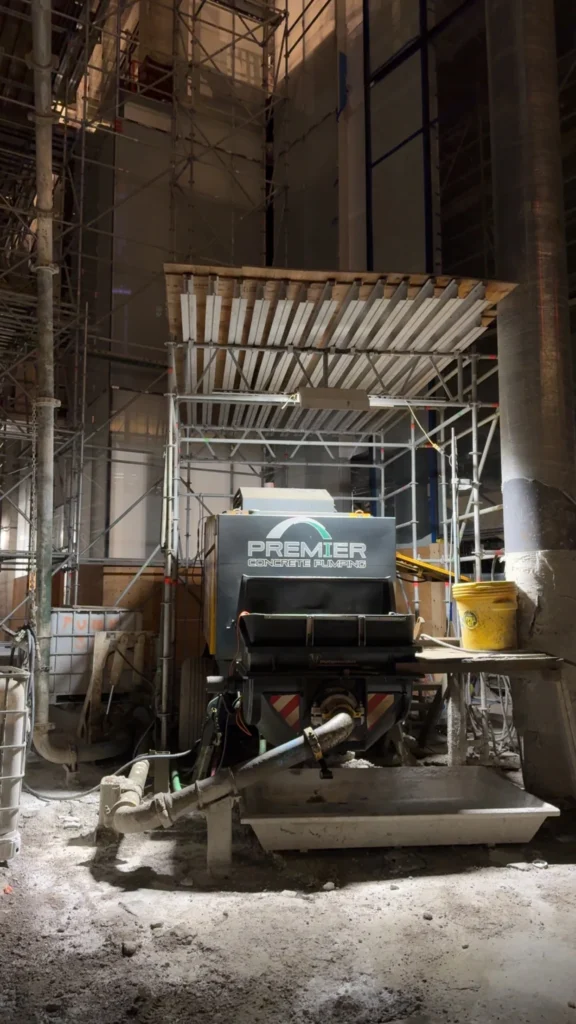
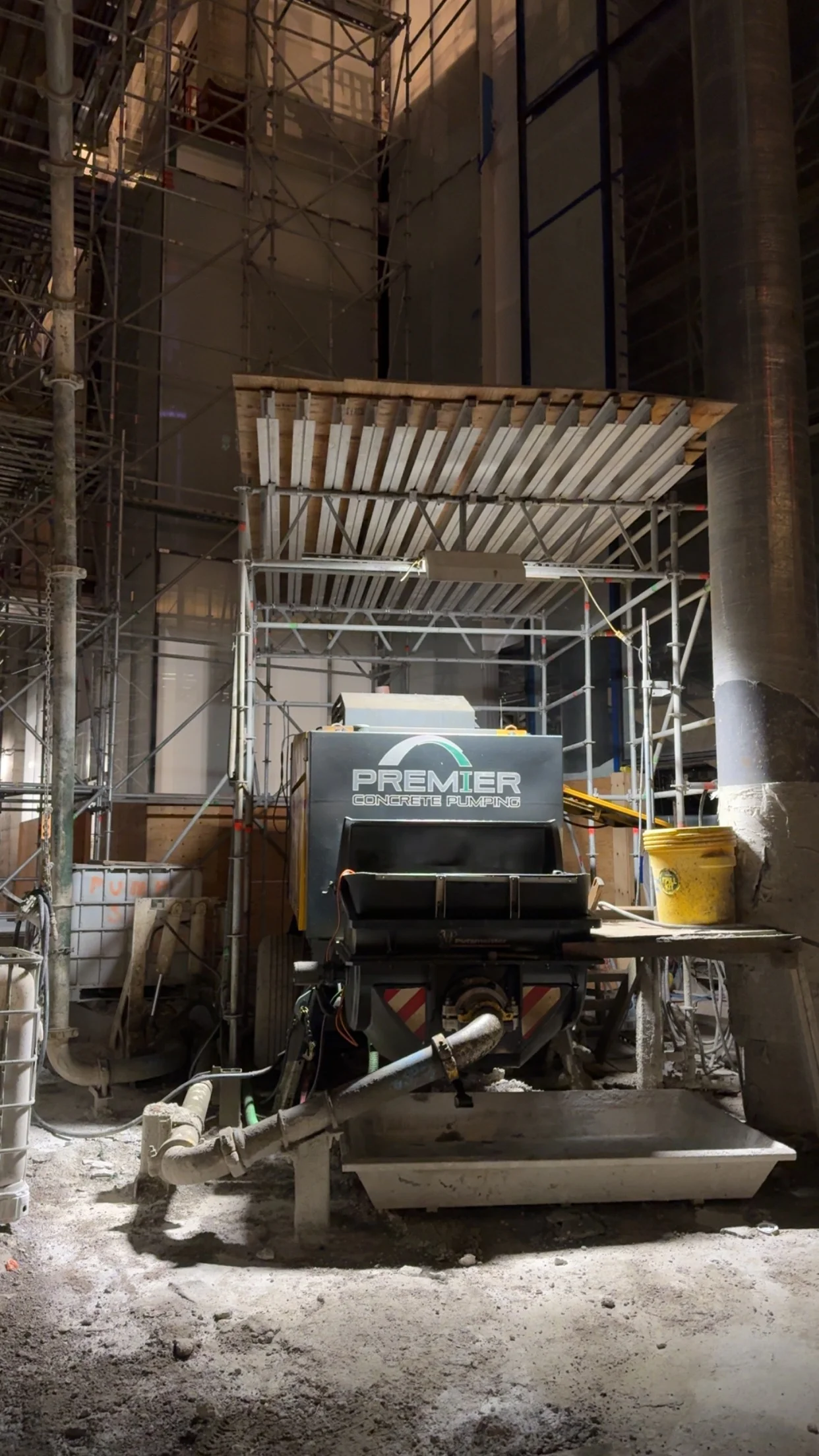
We bill from the moment our operator leaves the yard. Every job is structured the same way:
- Travel to site: your operator is on the clock from the time he leaves our facility, not from the time he arrives at your address.
- On-site time: from arrival through the full pour, cleanup, and the moment the truck is packed up and pulling off your property.
- Travel back to yard: return travel is included in the billable time after the operator leaves your site.
Every job carries a minimum number of hours that accounts for both the travel windows and on-site time. If your pour wraps up early, the minimum still applies.
Everything is explained in full before the truck rolls. You’ll know the hourly rate, the minimum, and any potential extras before the job is confirmed. There are no surprises on a Premier invoice.
COD Jobs, Commercial Accounts, and High-Volume Programs
Not every customer is the same, and our pricing structure reflects that.
COD customers work from a base rate. It’s a fair, straightforward price built around your hours, your volume, and any extras like a pump prime. No overtime, no complexity. It’s designed to be transparent and predictable for contractors who book on a job-by-job basis.
Commercial accounts are a different conversation. Commercial work often comes with additional safety requirements, site-specific compliance documentation, working-at-heights considerations, and operational complexity that residential pours don’t carry. Overtime may factor in depending on how the job runs. The pricing reflects the full scope of what it takes to put our equipment and operator on a commercial site properly.
High-volume programs are reviewed differently. If you’re bidding a project with a significant total concrete commitment — whether it’s a multi-phase development, a large ICI build, or an ongoing infrastructure program — bring that to us early. We look at the full picture when volume is guaranteed, and that works in your favour.
Placing Booms on Large Commercial Projects
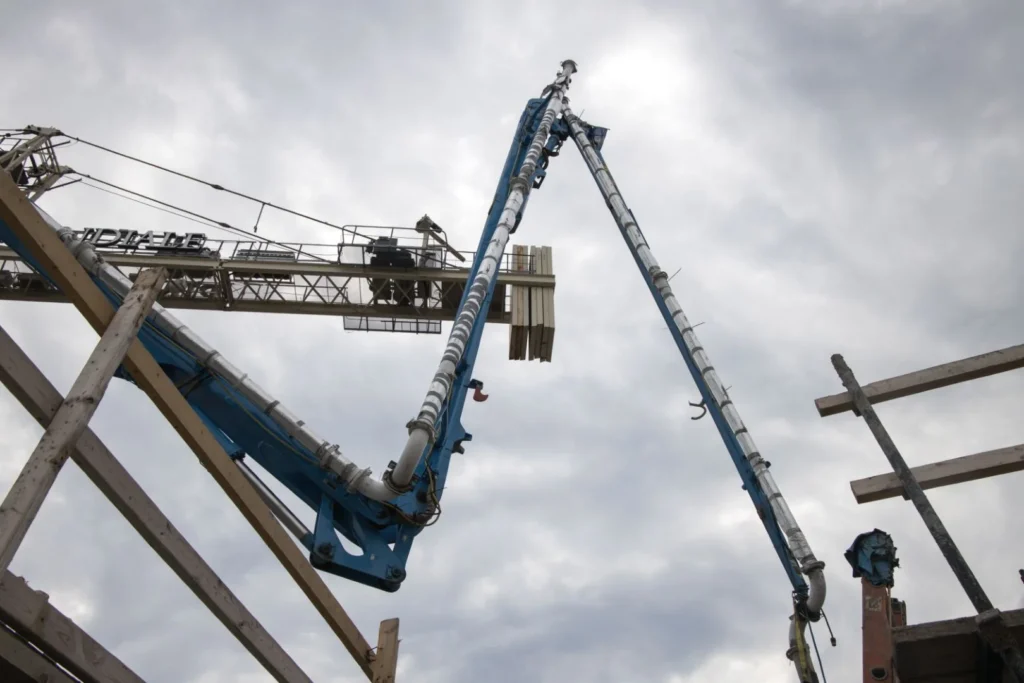
For high-rise construction, large condo towers, and major ICI projects, placing booms operate on a pricing model that’s distinct from standard boom pump or line pump work.
On projects at this scale, pricing shifts to a heavily volume-driven structure. Once a project commits to sustained, high-volume concrete placement over an extended period, the economics look different: it’s less about hourly rates and more about the total volume moving through the equipment over the life of the job.
The Niagara Hospital project is an example of how all these variables come together: longer travel distances, specialized placing boom equipment, extended on-site presence, and a large committed volume. Each of those components factored into how that job was priced. There’s no single-line answer for work at that scale — it requires a real conversation about what the project actually involves.
Renting a Trailer Pump Without an Operator
This is an option we offer, and it’s been coming up more frequently.
If your team has a qualified, experienced pump operator and you need the equipment itself, not a full crew, a weekly or monthly trailer pump rental is available. The structure is different from a standard pour day: there’s a deposit required upfront, and the pump is inspected on return. Any damage or parts requiring replacement after the rental period are billed to the renter.
There are legalities and responsibilities that come with operating our equipment independently, and we walk through all of that before a rental goes out. If this is the route you’re exploring, bring it up when you call. It’s not the right fit for every situation, but for the right contractor, it’s a real option.
Telebelt Conveyor Service
Telebelt conveyor work is priced similarly to our pump services. There’s a minimum, an hourly rate, and a usage component measured either by the metre or by the tonne depending on what the application calls for. The same principles apply: tell us about the job, and we’ll walk you through the full structure.
What to Ask When You’re Getting a Quote
If you’re calling us for the first time, or you want to make sure the quote you receive is accurate and covers everything, here’s how to come prepared:
- Tell us exactly what you’re doing. The pour type matters — foundation walls, elevated slabs, ICF, tilt-up, structural, infrastructure. Be as specific as you can.
- Know your volume, even roughly. How many cubic metres are you expecting to pour on a given day? Over the life of the project?
- Describe the site. Access constraints, overhead clearances, distance from the road to the form, tight lots, restricted staging areas — we use this to figure out what equipment makes sense.
- Have your timing ready. When do you need the pump on site? How long do you expect to be pouring? Are you coordinating with a specific batch plant or ready-mix supplier?
- Ask about minimums and extras upfront. We’ll walk you through everything. Minimum hours, hourly rate, pump prime, any site-specific considerations — it all gets covered before you commit.
You won’t get a locked-in final total from the quoting call — on-site conditions, concrete truck sequencing, stop-and-go situations, and other variables affect how long a job actually takes. What you will get is a clear hourly rate, your minimum, your potential extras, and an honest estimate of pour duration under normal conditions. That’s what you need to build your budget around.
The Shortest Answer to the Pricing Question
Call us. Tell us what you’re pouring, where you’re pouring it, and roughly how much. We’ll ask a few questions, figure out what equipment makes sense for your site, and walk you through the full cost structure — no ambiguity, no surprises.
If you’re in the middle of putting together a bid and need our numbers to complete it, let us know. We work with contractors at the bidding stage regularly. We’ll get you what you need to put your proposal together accurately and competitively.
Call Premier Concrete Pumping at 1-866-942-3410 or submit a quote request online and we’ll get back to you the same day.