Looking to build something stronger, more energy-efficient, and faster? Insulated Concrete Forms (ICFs) are changing the way homes and buildings are constructed across Ontario. In this article, we break down what ICFs are, how to use them properly, and how we at Premier Concrete Pumping help contractors pour ICF walls with speed and accuracy—especially in booming residential markets like Orillia, Oro Medonte, and Tiny.
From boom pump selection to concrete placement accessories like wall snakes and vibrators, we’re giving you the complete overview, plus why ICFs are being adopted for the future of sustainable construction.
What Are Insulated Concrete Forms (ICFs) and Why Are They Gaining Popularity?
Insulated Concrete Forms are rigid foam blocks made of expanded polystyrene (EPS), designed to be stacked like big LEGO bricks to form the shape of a wall. Once in place, they’re filled with concrete, creating a highly insulated, steel-reinforced wall that offers unmatched strength and thermal performance.
These forms stay in place after the pour—meaning they serve as both formwork and insulation in one system. ICF blocks have a hollow core where the concrete goes, surrounded by foam that stays permanently in place, locking in heat or cool air far better than traditional wood-frame builds.
ICFs have been around since the 1960s and are seeing a massive rise in demand, especially for builders focused on energy efficiency, long-term savings, and sustainability.
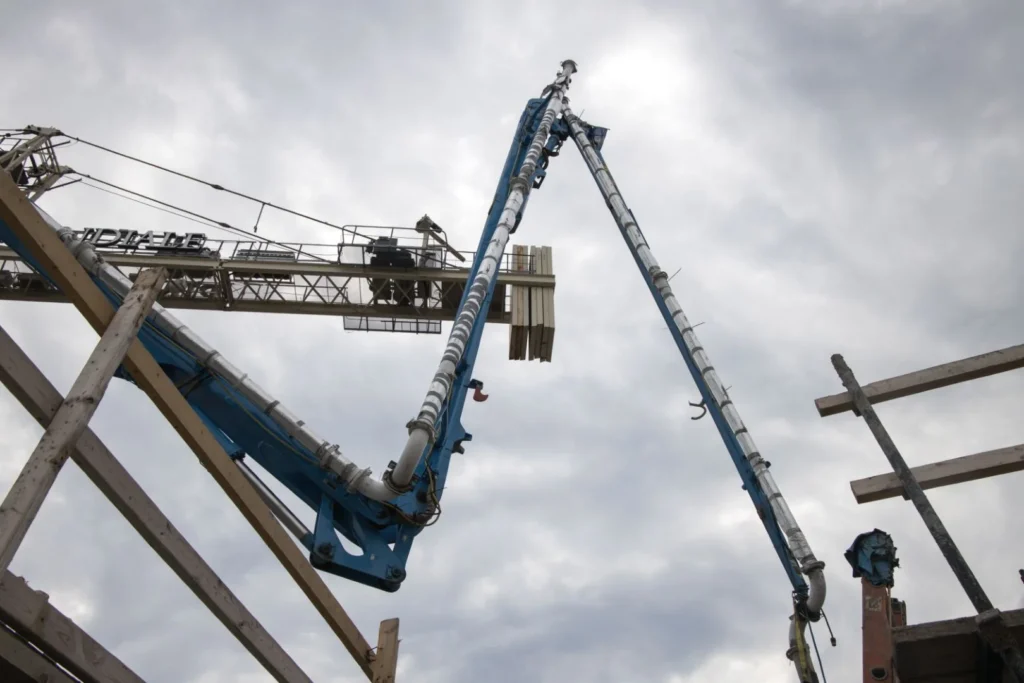
At Premier Concrete Pumping, we’ve worked with builders like ICF Home in Orillia, who specialize in residential projects exclusively built with ICF. For jobs like these, we typically run anything from a 20m boom up to a 40m depending on the reach and layout. We also bring the tools you need to make sure the pour is clean, even, and filled right the first time.
Learn more about our ICF Concrete Pumping Services.
How ICF Systems Work
An ICF system consists of two layers of foam (typically EPS) connected by plastic or metal ties. These formwork blocks are dry-stacked and filled with rebar and concrete on-site. Once cured, the concrete core gives the wall structural strength, while the foam remains as insulation. The result is a high-performance building envelope that can resist air leakage, temperature swings, sound transmission, and even disaster-level events.
Advantages of Building with ICF
Energy Efficiency
ICF blocks create a continuous insulated shell around your structure. The concrete core acts as a thermal mass, slowing down heat transfer, while the foam layers provide airtight protection. Compared to traditional wood-frame construction, ICF buildings can achieve up to 60% better R-values, which means fewer temperature swings, better humidity control, and major savings on energy bills.
Strength & Durability
ICF walls are incredibly strong. Many ICF structures can resist wind speeds up to 250 mph and stand up to earthquakes, fire, pests, and mold. Some ICF designs are 30% stronger than traditional concrete walls thanks to the solid pour and reinforcement.
For our team at Premier, pouring into ICF means understanding how much pressure the forms can handle. Pouring too fast or with too much volume can blow a wall—literally. That’s why all our operators are trained in ICF pours. We make sure the mix is right, the equipment fits, and the pressure is controlled throughout the pour.
Comfort & Air Quality
The airtight nature of ICF buildings prevents drafts and keeps outdoor allergens, dust, and pollution from getting in. For homeowners with allergies or respiratory issues, this matters. It also improves acoustic insulation. In fact, ICF walls can achieve an STC rating of 54, which blocks out roughly ⅔ more sound compared to wood-frame walls.
Cost Savings Over Time
Yes, ICF has a slightly higher upfront cost—typically 3–5% more than traditional framing. But the energy savings, reduced HVAC sizing, lower maintenance, and stronger protection pay off over the life of the building.
ICF homes often require smaller HVAC systems, further saving costs. Some regions in Ontario may also offer energy rebates or tax incentives for sustainable builds that use ICF, helping you or your clients offset those initial costs.
Want to know what size pump works for your ICF project? Check out our equipment selector tool.
Installation Best Practices
Jobsite Prep
Before starting any ICF pour, make sure the jobsite is ready:
- Flat, level subgrade
- Proper excavation depth based on frost walls or foundation
- Clear access for concrete trucks and boom pumps
- Clean setup zone for ICF blocks, rebar, and tools
We help contractors assess access points to recommend the right boom length. For example, a 40m boom may be needed if you’re reaching over existing structures or working around landscaping.
Stacking & Bracing
ICF blocks are stacked on top of each other and locked in place. Each course should be level and square to avoid bulging walls. Use alignment systems and bracing to keep everything tight. Reinforcement (rebar) is placed inside per local code.
Pouring & Vibrating
Pouring concrete into ICF should be done in 4-foot lifts to reduce pressure buildup and avoid air pockets. We use a 1” vibrator to make sure the mix flows all the way to the bottom of the form.
We also bring a wall pipe or wall snake that attaches to the boom, allowing the operator to drop concrete deeper into the forms—ensuring smooth placement without high impact.
Curing & Inspection
Let the concrete cure at least 24–48 hours before stripping bracing or continuing construction. Premature movement can affect wall strength. Our team follows a pre-pour and post-pour checklist to ensure we hit every step correctly.
Common Mistakes & How to Avoid Them
- Pouring too fast: Causes walls to blow out. We regulate volume and boom position.
- Skipping vibration: Leads to air pockets and weak spots.
- Bad bracing: Walls can bow if not aligned.
- Poor mix choice: Mix must suit the ICF system—plasticized, right slump, self-consolidating when needed.
- Improper rebar layout: Reduces wall strength and code compliance.
How Concrete Mix Design Affects ICF Performance
Getting the concrete mix right is critical for successful ICF pours. While ICFs may look like a forgiving system, the wrong mix design can create issues ranging from honeycombing to blowouts and cold joints.
Recommended Mix for ICF Walls
- Slump: 5″ to 6.5″
- Aggregate Size: 10mm or 3/8” max
- Plasticizers: Increase flow without excess water
- SCC (Self-Consolidating Concrete): Great for tall walls or tight reinforcement
- Air Entrainment: Prevents freeze-thaw cracking
Mixing Mistakes to Avoid
- Adding water on-site
- Using large aggregate
- Skipping plasticizers
Our operators are trained to stop the pour immediately if the mix doesn’t look right. We’ll adjust with your team and ensure a smooth outcome.
ICF and the Future of Building
As Ontario shifts toward Net Zero Energy construction and stricter building codes, ICF construction is positioned to lead the way. The energy savings, lower emissions, and disaster resilience make it ideal for modern homebuilding.
ICFs also support smart home integration. These walls can house sensors, wiring, and advanced HVAC infrastructure while protecting it all behind foam and concrete. They’re quiet, durable, and ready for future tech.
Our operators are fully trained for ICF, ICI, shotcrete, and infrastructure jobs. View all services.
FAQ – Insulated Concrete Forms
What exactly are ICFs?
They are EPS foam blocks with a hollow core, filled with reinforced concrete on-site. The foam remains in place and acts as insulation.
Are ICF homes stronger?
Yes. They are more fire-resistant, quieter, and can withstand extreme weather better than wood-framed homes.
Is ICF more expensive?
Slightly, yes—but typically only 3–5% more upfront, which is offset by long-term energy savings and durability.
Do I need special equipment to pour into ICF?
Not if you’re working with us. We bring boom pumps (20–40m), wall pipes, vibrators, and trained operators ready for ICF work.
Where do you service?
All of Southern Ontario—especially Orillia, Oro Medonte, Tiny, Muskoka, Barrie, and more.