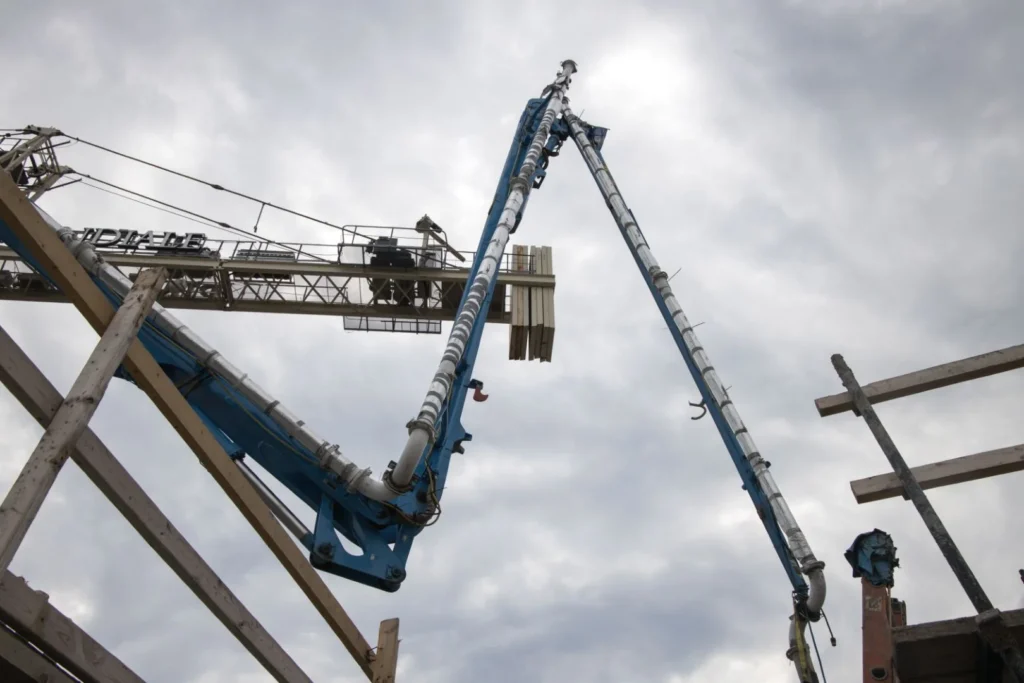
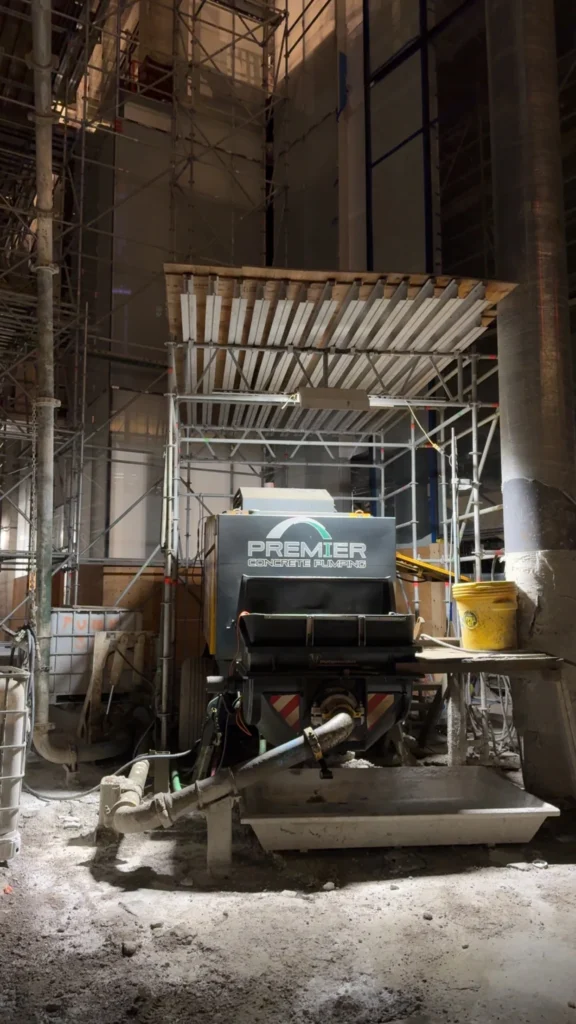
Concrete pumping is the process of moving ready-mix concrete from a truck to the exact place it needs to go using specialized pumping equipment. Instead of relying on wheelbarrows, chutes, or manual labour, concrete pumping allows concrete to be placed quickly, safely, and accurately — even in hard-to-reach areas.
At Premier Concrete Pumping, we use concrete pumps every day across Ontario to help contractors place concrete for slabs, foundations, walls, basements, additions, and infrastructure work. This guide explains what concrete pumping is, how it works, when you need it, and which type of pump makes the most sense for your project.
If you’re planning a pour and want to avoid delays, access issues, or wasted concrete, this article will give you a solid foundation to work from.
What is Concrete Pumping?
Concrete pumping is used when a concrete truck cannot safely or efficiently reach the pour location. Instead of dumping concrete close to the work area, the truck discharges concrete into a pump, which then pushes the material through a system of steel pipe and flexible hose directly to the pour point.
We see concrete pumping used on residential, commercial, industrial, and infrastructure job sites where access is tight, elevation changes exist, or speed and safety are critical.
Concrete pumping is commonly used for:
- Basement floor pours
- Foundation walls and footings
- Backyard additions and extensions
- Driveways, pads, and slabs
- Second-storey or elevated pours
- ICF wall systems
- Indoor pours where trucks cannot enter
If you’re working in tight conditions, our guide on concrete pump setup for complex job sites is a helpful next step.
How concrete pumping works, step-by-step
| Step | What Happens |
|---|---|
| Site assessment | We arrive ahead of the concrete delivery to review access, hazards, pour location, and equipment placement. |
| Pump setup | The pump is staged and stabilized, and the boom or line is routed to the pour point. |
| Concrete delivery | The ready-mix truck discharges concrete into the pump hopper. |
| Pumping | The pump pushes concrete through the line at a controlled speed and pressure. |
| Placement | Concrete is placed exactly where the crew needs it, minimizing handling. |
| Cleanup | Lines are cleaned out, equipment is packed up, and the site is left clean. |
Proper setup and cleanup are included in the pumping process, which is why preparation matters. Delays caused by unfinished forms or missing materials can extend on-site time.
Concrete pumping vs wheelbarrows and chutes
Concrete was moved by wheelbarrow long before pumps existed, and it still happens on some job sites. However, wheelbarrowing concrete comes with major limitations — especially as pours get larger or access becomes restricted.
| Method | Pros | Cons |
|---|---|---|
| Wheelbarrows | Low upfront cost | Labour intensive, slow, high risk of concrete setting before placement |
| Truck chutes | Simple when access is perfect | Very limited reach, not usable indoors or over obstacles |
| Concrete pumping | Fast, precise, safer, reaches difficult areas | Requires pump planning and coordination |
Concrete only has a limited working time in the truck. If crews fall behind while wheelbarrowing, there is a real risk of losing concrete before it’s placed. Pumping helps eliminate that risk by keeping material moving consistently.
Types of concrete pumps
There are two main types of concrete pumps used on job sites. Choosing the right one depends on access, distance, elevation, and pour size.
Boom pumps
Boom pumps use a hydraulic, articulated arm to place concrete. They are ideal for large pours, elevated placements, or situations where concrete must go up and over obstacles.
- Excellent for large slabs and foundation walls
- Can reach over buildings, fences, and structures
- High output and faster placement
Learn more on our equipment page or explore ICI concrete pumping services.
Line pumps (trailer pumps)
Line pumps use steel pipe and flexible hose routed along the ground or through structures. They are commonly used for residential work and tight-access pours.
- Ideal for basements, additions, and backyard pours
- Can run through windows, doors, and garages
- Smaller footprint on site
See trailer and line pump services for typical residential applications.
Concrete mix considerations for pumping
Most standard concrete mixes can be pumped, but line size and aggregate size must be matched properly. Smaller lines require smaller aggregate to avoid blockages.
| Pump / Line Size | Typical Use | Mix Consideration |
|---|---|---|
| 5-inch boom line | Large pours | Standard aggregate |
| 4-inch line | Residential slabs | Moderate aggregate size |
| 3-inch / 2-inch line | Block fill, tight walls | Smaller aggregate required |
This is especially important for block foundations, ICF walls, and narrow forms. If you’re working on those projects, also read block foundation vs poured concrete foundation and what is an ICF concrete foundation.
The role of the concrete pump operator
Every concrete pump comes with a trained operator. Their role is to safely set up the equipment, control flow and pressure, and coordinate with the crew during placement.
Operators use remote controls to:
- Start and stop concrete flow
- Adjust pumping speed and pressure
- Position booms or manage line pressure
- Maintain safety around moving equipment
If something on site becomes unsafe or inefficient, operators step in to correct the process. Safety and consistency are part of the service.
For safety standards, see our health and safety page.
When should you use concrete pumping?
Concrete pumping is typically the best option when:
- The concrete truck cannot reach the pour location
- The pour is below grade (basements)
- The pour is above grade (upper floors)
- Access is restricted by buildings or fencing
- Speed and efficiency matter
If your project involves slabs or floors, these related articles may help: concrete slab vs concrete pad and how to pour a concrete floor slab.
Do concrete pumping companies supply the concrete?
No. Concrete pumping companies supply the pump, operator, and accessories.
Concrete must be ordered separately from a ready-mix supplier.
Is concrete pumping faster than wheelbarrows?
Yes. Pumping moves concrete continuously and significantly reduces labour and placement time.
Can concrete be pumped into a basement?
Yes. Line pumps are commonly used to route concrete through windows or door openings into basements.
What projects benefit most from concrete pumping?
Basements, foundations, additions, slabs, ICF walls, and any pour with limited access benefit from pumping.