Boom Pump vs Line Pump: Choosing the Right Concrete Pump for Your Project
Concrete pumping has become essential on job sites where efficiency, reach, and speed matter. Whether you’re tackling a small backyard pour or a large-scale commercial foundation, choosing the right pump is critical. The two most common types of pumps in the industry are boom pumps and line pumps. Each serves a different purpose, and understanding when to use one over the other can make or break your project’s schedule and budget.
As a trusted concrete pumping provider, Premier Concrete Pumping offers both boom and line pump options across Southern Ontario, including 65m and 50m boom pumps for large-scale pours, and multiple line pump setups for tight-access or low-volume jobs. Here’s a comprehensive breakdown of how they differ, and how to choose the best one for your needs.
What is a Boom Pump?
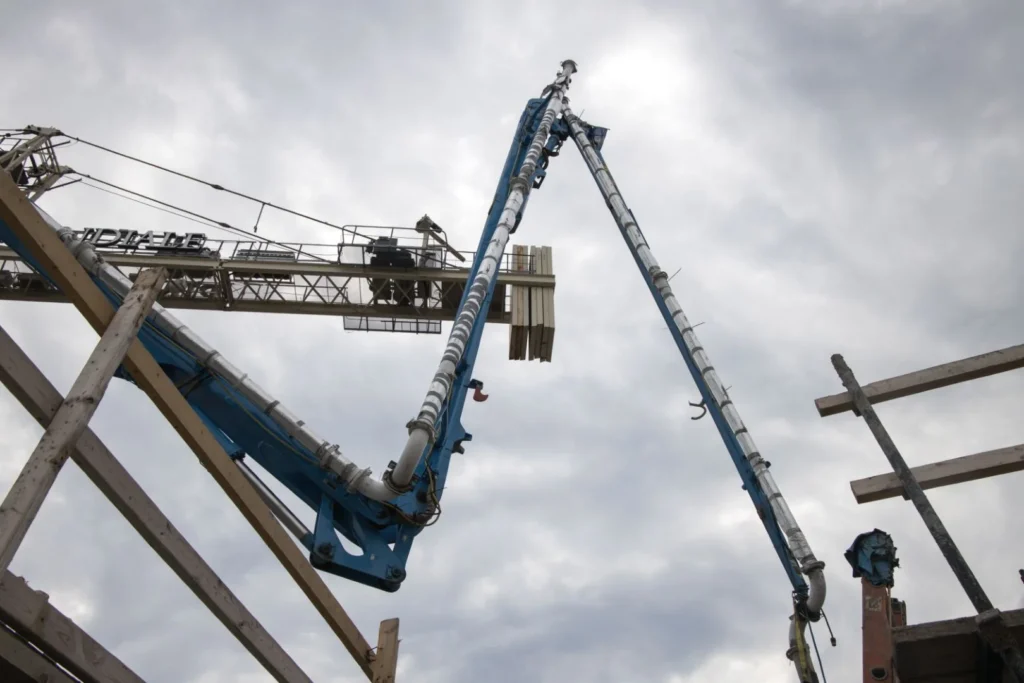
A boom pump is a truck-mounted concrete pump equipped with a robotic articulating arm (the “boom”) that allows for precise concrete placement at height or distance. The operator controls the boom remotely, enabling quick, accurate pours in difficult-to-access areas.
Advantages of a Boom Pump
Speed & Efficiency: Pumps concrete rapidly over long distances or high structures
Remote Operation: Reduces manpower — one operator can handle the boom from a safe distance
Reach: Ideal for multi-story buildings or over obstructions (roofs, fences, etc.)
Precision: Articulating arm enables highly accurate placement, reducing cleanup
Time-Saving: Eliminates wheelbarrow transport or multiple repositionings
Disadvantages
Higher Cost: Typically more expensive to rent and operate than line pumps
Limited Accessibility: Requires sufficient space for truck and boom arm
Setup Time: More preparation required before pouring begins
What is a Line Pump?
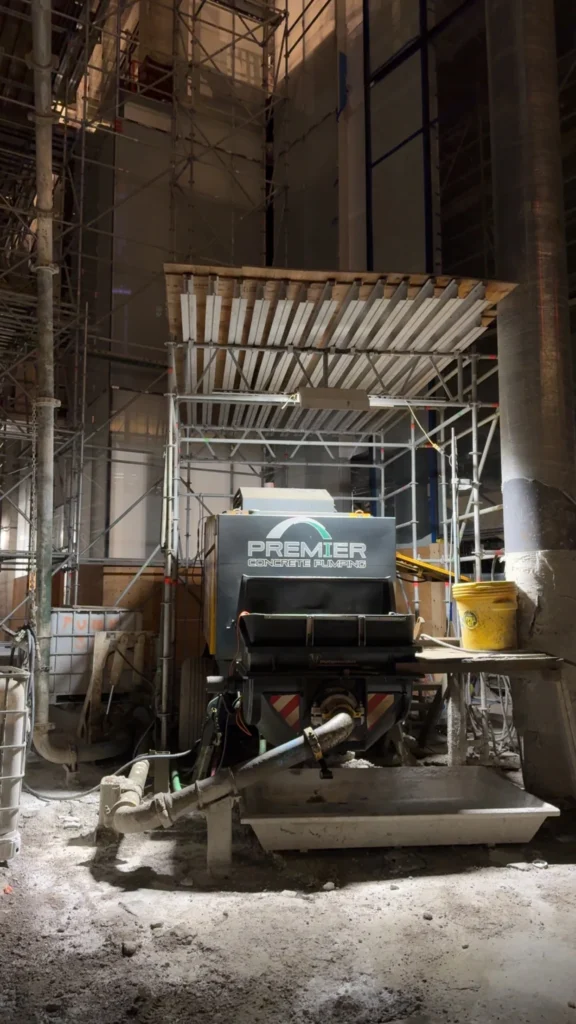
A line pump is a trailer-mounted pump (sometimes truck-mounted) that pushes concrete through a flexible rubber hose. The hose can be extended as needed, making this option highly flexible for ground-level or hard-to-reach areas.
Advantages of a Line Pump
Highly Maneuverable: Hoses can weave around corners, through buildings, or down narrow alleys
Cost-Effective: Ideal for small to mid-sized jobs with budget constraints
Perfect for Residential Jobs: Patios, walkways, basements, and pool decks
Lower Profile Equipment: Easier to fit on compact job sites
Disadvantages
Slower Output: Not suited for very large pours
Labor-Intensive: Requires workers to handle and move hoses throughout the pour
Prone to Blockages: Improper mix or cold temperatures may cause clogs
Boom Pump vs Line Pump: A Side-by-Side Comparison
| Feature | Boom Pump | Line Pump |
|---|---|---|
| Output Volume | High (up to 150 m³/hr or more) | Moderate (typically 30-90 m³/hr) |
| Reach | Up to 61 meters (with Premier) | Limited to hose length |
| Ideal For | Large commercial, high-rise pours | Residential or low-volume projects |
| Accessibility | Needs large staging area | Fits tight spaces easily |
| Speed | Fast | Slower |
| Setup Time | Medium | Quick |
| Operator Skill | Requires certified operator | Easier to train/use |
When Should You Use a Boom Pump?
Boom pumps are ideal for:
High-rise structures
Bridges and overpasses
Large slabs (warehouses, stadiums, shopping centers)
Pours requiring speed and precision
Sites with limited ground access or obstacles
Premier Concrete Pumping provides both 50m and 61m boom pumps — the largest in our fleet — to meet the needs of high-volume pours with tough-to-reach placements.
When Should You Use a Line Pump?
Line pumps are best for:
Residential jobs (driveways, basements, patios)
Jobsites with narrow access points
Projects with a tighter budget
Horizontal pours that require precision over reach
We routinely use line pumps for:
Backyard slab work
Footings and sidewalks
Underpinning projects
Pool decks
What Premier Concrete Pumping Does Differently
Unlike many providers, Premier takes the guesswork out of pump selection:
Job Walkthroughs: We assess your site conditions before pouring to recommend the right pump
Full Equipment Range: From compact trailer line pumps to 61m boom trucks
Trained Operators: Our team is certified, experienced, and safety-focused
Flexible Scheduling: Whether you’re in Vaughan, Hamilton, or Barrie, we coordinate around your timeline
We don’t just show up and pump — we partner with contractors to ensure a clean, smooth pour every time.
Final Thoughts
Your choice between a boom and line pump should be driven by three key factors:
Volume of concrete required
Access to the pour site
Project type (residential vs commercial)
With Premier Concrete Pumping’s diverse fleet and personalized job planning, you’re never left guessing. Reach out to our dispatch team to plan your next pour with confidence.
Related Articles
Need Help Choosing the Right Pump?
Contact Premier Concrete Pumping to get expert advice and fast scheduling.