If it’s your first time using a concrete pump, this guide will walk you through everything you need to know — from choosing between a boom or line pump to preparing your site and working with our operators on pour day. At Premier Concrete Pumping, we make sure first-time users are fully supported so the job runs smoothly from start to finish.
1. Choosing the Right Pump for Your Project
Before we even arrive on-site, it’s important to know what type of pump your project needs. The two main options are boom pumps and line pumps.
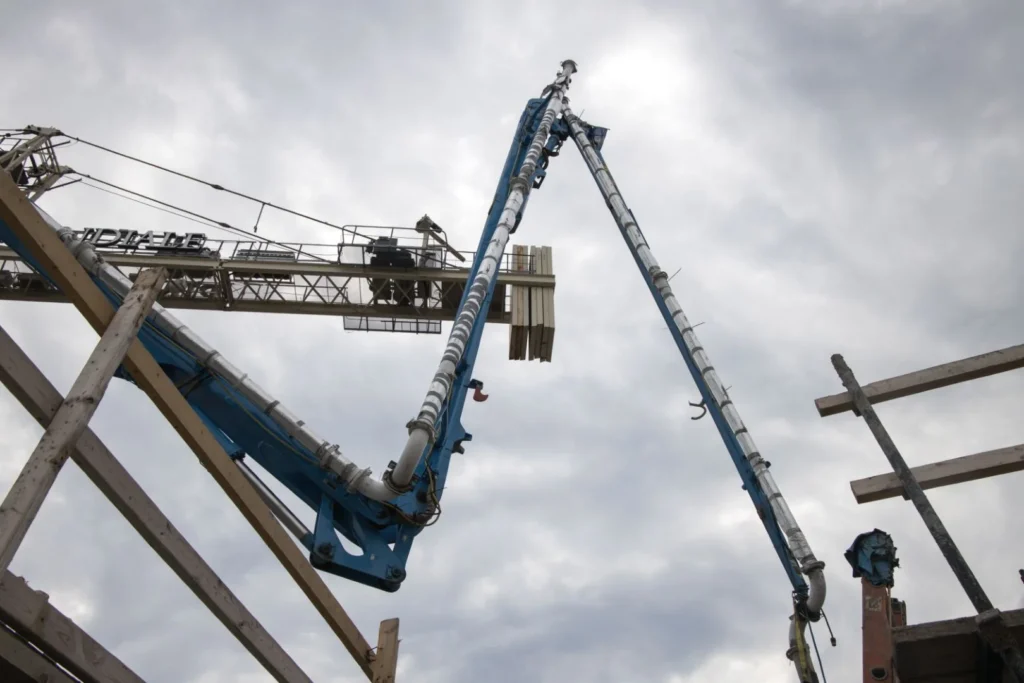
Boom pumps are ideal for large or high-reach pours like bridge decks, abutments, or multi-storey buildings. They use a hydraulic arm to place concrete with precision.
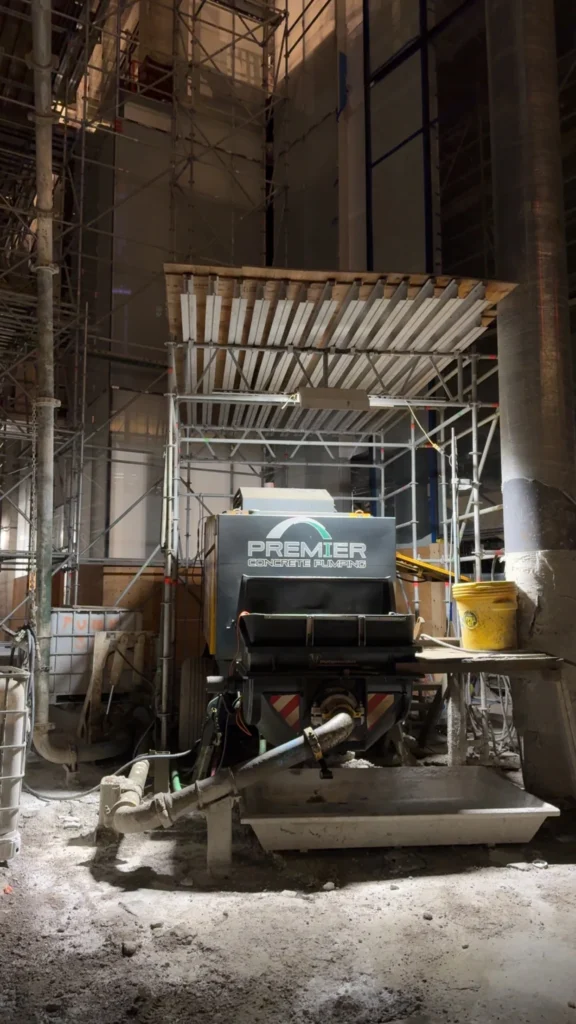
Line pumps are better suited for smaller or tighter job sites like basements, driveways, or floor slabs. They use flexible hoses connected to a trailer-mounted pump.
For first-time users, line pumps are the most common choice — they’re easier to set up, require less space, and can reach up to 500 feet from the pump.
Here’s a quick comparison:
| Pump Type | Ideal For | Setup Time | Max Reach | Operator Setup |
|---|---|---|---|---|
| Boom Pump | High-rise, bridges, large pours | Longer | Up to 65m | 1 operator |
| Line Pump | Driveways, basements, slabs | Shorter | Up to 500ft | 1–3 operators depending on length |
You can also use our Boom Pump Selector or visit our Line Pump Services page to determine which setup best suits your project.
2. Preparing Your Work Site Before the Pump Arrives
Site preparation is key to a smooth operation. Before our crew arrives, ensure the following:
The ground is flat and stable — this helps keep the pump level and safe.
There’s a clear path from where the truck parks to where the concrete will be poured.
No obstructions like trees, cables, or piles of material are in the way.
If your site is cluttered or uneven, the pour may take longer and cost more. To learn more, read our Work Site Preparation Guide.
3. How Many Operators You’ll Need
Depending on how long your hose setup is, the number of operators on-site will vary:
Under 200ft: 1 operator (standard setup)
200–300ft: 2 operators for hose management and monitoring
400–500ft: 3 or more operators to manage pressure and safety
Our team always ensures that a trained operator is on-site to assist you. Their role is to handle setup, monitor pressure, and guide your team through the process — especially if it’s your first time pumping.
4. Setting Up Line Pump Hoses and Routes
The hose path, or “line route,” must be planned carefully. For efficient pumping, the route should be as flat and direct as possible. If your job site has obstacles or elevation changes, we use elbows, reducers, and specialized fittings to navigate tight turns or uneven ground.
Nylon vs Steel Lines
You’ll also want to understand the difference between the two main hose types:
| Hose Type | Description | Best Use |
|---|---|---|
| Nylon Lines | Lightweight, flexible, easier to maneuver | Short residential runs or small pours |
| Steel Lines | Heavier but durable, can handle higher pressure | Long runs or large commercial pours |
Our operators will determine which combination suits your project best. For more details on our tools and fittings, visit Our Equipment.
5. Hose Diameter and Concrete Mix
The diameter of your hose depends on the aggregate size and mix type of your concrete. Using the wrong diameter can cause blockages or pressure issues.
| Concrete Type | Max Aggregate Size | Recommended Hose Diameter |
|---|---|---|
| Standard Residential Mix | ≤ 3/8” | 2”–3” |
| Structural or Industrial Mix | ≤ 3/4” | 4” |
| Heavy Mix / Shotcrete | ≤ 1” | 4”–5” |
To ensure a smooth pour, the stone content and water-cement ratio must be compatible with the selected hose. For more insights, check out Choosing the Right Concrete Mix and Pump Line Size.
6. Working With the Operator During the Pour
Every pump we send out includes an experienced operator who will help set up and guide your team during the pour. Here’s how to make the most of the partnership:
Follow their instructions. They’ll control pump pressure, flow rate, and timing.
Communicate clearly. Use hand signals or short verbal cues when adjusting flow or repositioning hoses.
Keep the pour area organized. Avoid standing directly in front of the discharge hose to prevent injury.
Our operators are trained not only to run the equipment but to ensure that first-time users feel confident and supported throughout the process.
7. Cleaning and Washout Procedures
Once the pour is complete, cleanup begins. This part is often charged by time, so helping out can save you money.
Our pumps come equipped with onboard compressed air, water supply, and cleanout tools like:
Blowout caps to clear lines
Ball catchers for debris collection
Washout bags for environmentally safe disposal
If your team assists with cleanout — especially flushing hoses and packing up lines — you’ll shorten the total job time. Learn more about our fast and tidy process on the Our Equipment page.
8. Common Mistakes First-Time Users Make
Even with an operator present, first-time users sometimes run into the same challenges. Here’s what to avoid:
Not preparing a flat or clear work surface
Choosing the wrong hose size for the mix
Underestimating setup and cleanup time
Allowing hoses to twist or kink during pumping
Forgetting to check for overhead power lines when using a boom pump
Avoiding these simple mistakes keeps your project safe and efficient.
9. Safety Guidelines
Safety is always the top priority on any concrete pumping site. Before starting:
Make sure everyone wears high-visibility clothing, hard hats, and steel-toe boots.
Keep a safe distance from the discharge end of the hose.
Never walk or stand on a pressurized hose.
Listen to the operator’s instructions, especially during priming and cleaning.
You can read more about our safety practices on our Health & Safety page.
Frequently Asked Questions
1. What’s the difference between a boom pump and a line pump?
Boom pumps are mounted on trucks with a hydraulic arm for high or far-reaching pours, while line pumps use hoses for smaller, more controlled pours.
2. How many operators will be on-site for my first pour?
You’ll always have at least one trained operator, but longer line runs may require two or more for efficiency and safety.
3. Can I save money by helping with cleanup?
Yes. You’re billed by time, including cleanout, so helping your operator can reduce costs.
4. What should I do before the pump arrives?
Clear the path from the truck to the pour area, ensure the ground is flat, and remove obstacles like debris or branches.
5. What’s better — nylon or steel lines?
Nylon is easier to handle and great for residential projects, while steel lines are used for long or high-pressure pours.
6. How long does setup take?
Most line pump setups take 30–60 minutes, depending on site conditions and hose length.
7. Do I need to worry about hose diameter?
Yes. The stone size in your mix determines hose diameter — larger aggregates need larger hoses.