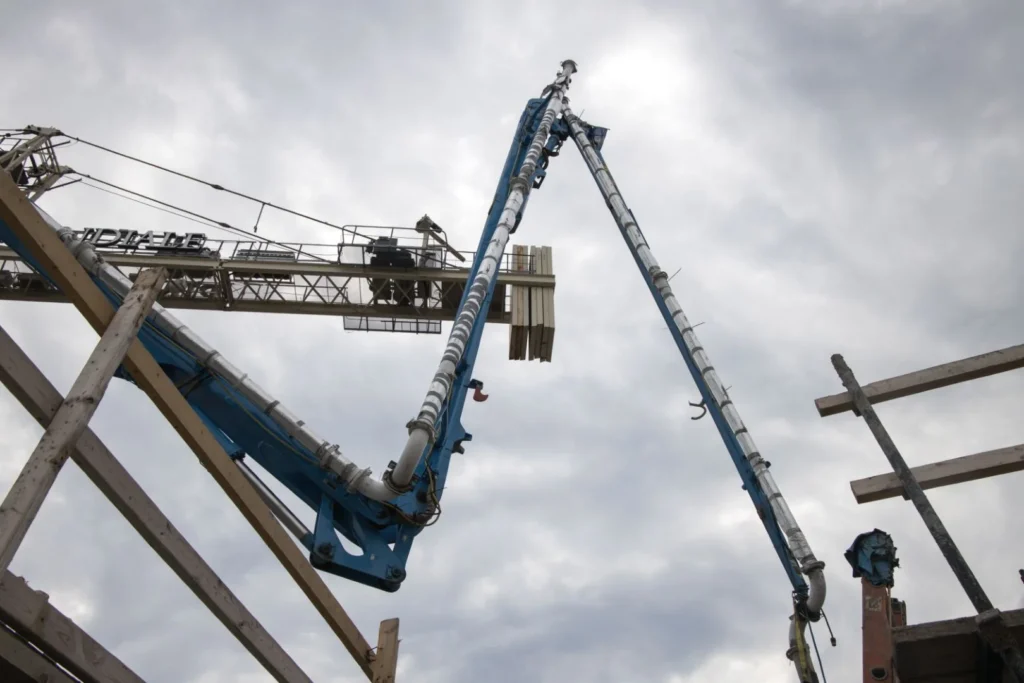
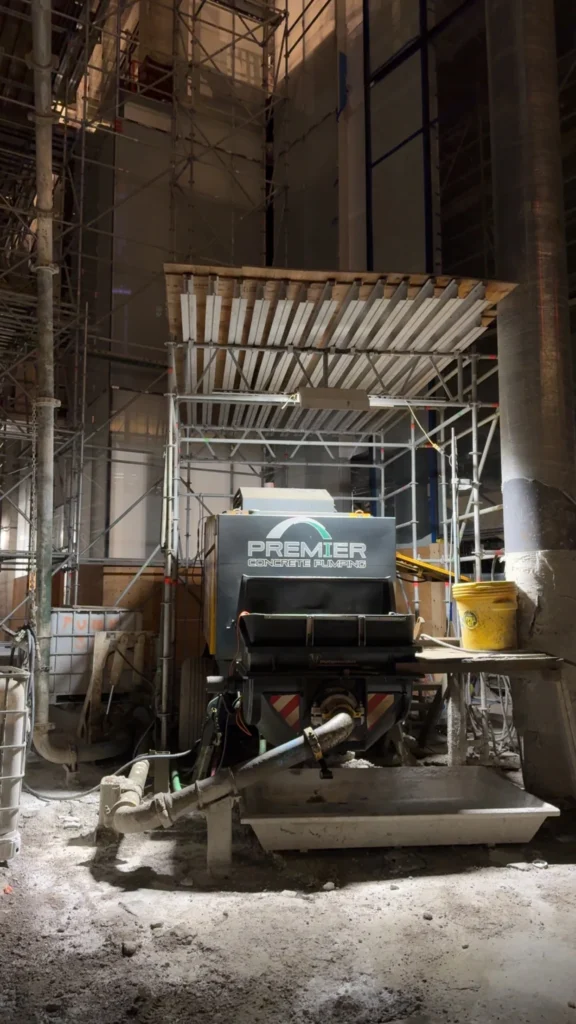
The concrete cleanout phase, while essential, is statistically the most critical and potentially dangerous part of any pumping job. It involves high pressure, residual material, and strict environmental compliance.
At Premier Concrete Pumping, we have a clear, safe, and efficient protocol to manage the end of every pour, ensuring your site is left clean and your crew is safe.
1. The Critical Moment: Safety During Cleanout
Why is Cleanout Considered the Most Dangerous Part of the Pour?
The cleanout process involves using compressed air or water to expel the residual concrete from the rigid piping and flexible hoses. This is dangerous because of the high, often unpredictable, pressure required to push a dense material like concrete out of the line.
The main risks are:
- Unexpected Discharge: The plug (typically a sponge ball) and residual concrete can exit the hose with high kinetic energy.
- Line Movement: Pressurized lines can whip or move violently if not properly secured, potentially causing injury.
Our operators are highly trained to manage this phase, controlling the pressure and ensuring discharge is contained.
Air Cleanout vs. Water Cleanout: Which is Safer?
Premier uses the safest and most efficient method based on the equipment and line length.
Air Cleanout (Boom Pumps & Long Line Runs)
This is the most common method for boom pumps and any line pump run exceeding approximately 40 feet.
- Process: A wet sponge ball is inserted into the line, and compressed air (supplied directly from our pump’s onboard system) is used to push the ball through the piping.
- Result: The sponge acts as a plunger, clearing nearly all residual concrete and leaving a virtually clean line.
Water Cleanout (Short Line Runs)
This method is preferred for shorter line pump setups, typically runs of 40 feet or less.
- Process: The crew can quickly disconnect the rigid piping into shorter sections (e.g., 10-foot lengths). Our operators use onboard water and the crew’s power washers to flush each section individually.
- Advantage: Eliminates the need for high-pressure air discharge on the ground.
| Method | Typical Application | Key Equipment | Reason for Use |
|---|---|---|---|
| Air | Boom Pumps, Long Line Pumps (>40 ft) | Compressed Air, Sponge Ball | Most efficient for long, continuous lengths. |
| Water | Short Line Pumps (<40 ft), Detail Work | Onboard Water, Power Washer | Safer for short sections; allows for manual inspection of pipe cleanliness. |
Operator Spotting and Site Crew Involvement
Our certified operators are proficient in managing the cleanout sequence. While a dedicated spotter is not normally required for the Premier operator to perform the cleanout, the site crew responsible for receiving the discharge must be acutely aware of the process and keep a safe distance from the hose end until the line is confirmed clear.
2. Site Hygiene and Environmental Compliance
We bring the equipment, but we require contractor partnership to ensure a clean site and environmental compliance.
What the Contractor Needs to Provide
All Premier pumps are equipped with onboard water tanks for cleaning the pump itself, and ready-mix drivers also carry water. The only crucial element the contractor must provide is a designated, contained washout area.
| Waste Stream | Responsibility | Requirements |
|---|---|---|
| Residual Hopper Concrete | Contractor / Premier | We try to keep the hopper clear. Remaining material must be deposited in the washout area. |
| Wash Water | Contractor | Must be contained to prevent runoff into sewers or soil. |
| Washout Material Disposal | Contractor | If the site does not have a washout pit, we can provide a heavy-duty, certified washout bag. The concrete and the bag are left on site, and the contractor is responsible for its proper disposal as construction waste. |
Preventing Concrete Splatter
During the compressed air “blow-out,” the goal is to contain all concrete and water at the designated area.
- Protocol: The operator ensures the discharge end is placed inside the containment area (washout pit or bag). The operator controls the air pressure incrementally to prevent a violent discharge that could splash or spray surrounding walls, equipment, or vehicles.
Rental Hours and Cleanout Time
The cleanout process is a mandatory part of the job and counts toward the rental hours.
- Efficiency Guarantee: Premier’s use of efficient air cleanout methods ensures this phase is completed as quickly as possible, saving you time and money.
Need to Schedule Your Next Safe Pour?
Contact Premier Concrete Pumping to schedule your next job, where safety and efficiency are pumped into every project. Speak With Dispatch or view our full range of Pumping Services.