Pumping Concrete in Cold Weather: Can It Be Done Safely?
Yes, concrete pumping in cold or freezing temperatures can be done successfully—but it requires the right preparation, equipment, and experience. At Premier Concrete Pumping, we regularly operate throughout Ontario’s winter months and know firsthand how to manage the challenges that cold weather brings.
In this article, we’ll explore the advantages and risks of pumping concrete in freezing conditions, plus share practical tips that keep your pour strong, safe, and on schedule.
Why Cold Weather Affects Concrete
Concrete’s performance depends heavily on temperature. The hydration process that causes concrete to harden slows down as temperatures drop. If it gets too cold—especially near or below freezing—the water inside the mix can freeze, leading to cracking, poor curing, or even structural weakness.
That’s why understanding how to manage the balance between temperature, timing, and mix consistency is critical when planning a cold-weather pour.
The Advantages of Pumping Concrete in Cold Weather
While winter conditions present challenges, they also offer unique benefits if handled correctly.
| Advantage | Why It Matters |
|---|---|
| Slower setting time | Gives you more working time to place and finish the concrete before it sets. |
| Improved pumpability | Cooler temperatures prevent premature thickening, helping concrete flow smoothly through hoses. |
| Reduced line clogging | Cold mixes stay lubricated longer, lowering the risk of pressure fluctuations or blockages. |
| Better control over curing | You can plan your set time more precisely without racing against heat-related delays. |
| Stronger final product | Slower hydration leads to a denser microstructure and higher long-term compressive strength. |
As Sarah from Premier noted, cooler temperatures actually make concrete easier to work with — especially for new contractors or DIYers who want more flexibility during placement and finishing.
The Challenges of Pumping in Freezing Temperatures
Cold weather also introduces several risks that must be managed before, during, and after your pour:
Freezing in the mix: If the concrete or water freezes before the mix sets, it loses strength once cured.
Longer curing times: It may take days longer for concrete to reach full strength.
Use of curing blankets: Heavy, insulated tarps help maintain warmth after placement and are essential in sub-zero conditions.
Mix temperature management: Concrete must remain above freezing during delivery and pumping — sometimes requiring heated water or admixtures.
Pump line freezing: If temperatures drop too quickly, leftover mix or water in hoses can freeze, creating blockages.
At Premier, we take proactive steps to minimize these risks.
How Premier Concrete Pumping Prepares for Cold Weather
When temperatures dip below a set threshold, we don’t stop pumping — we adapt. Here’s how we ensure cold-weather pours go smoothly:
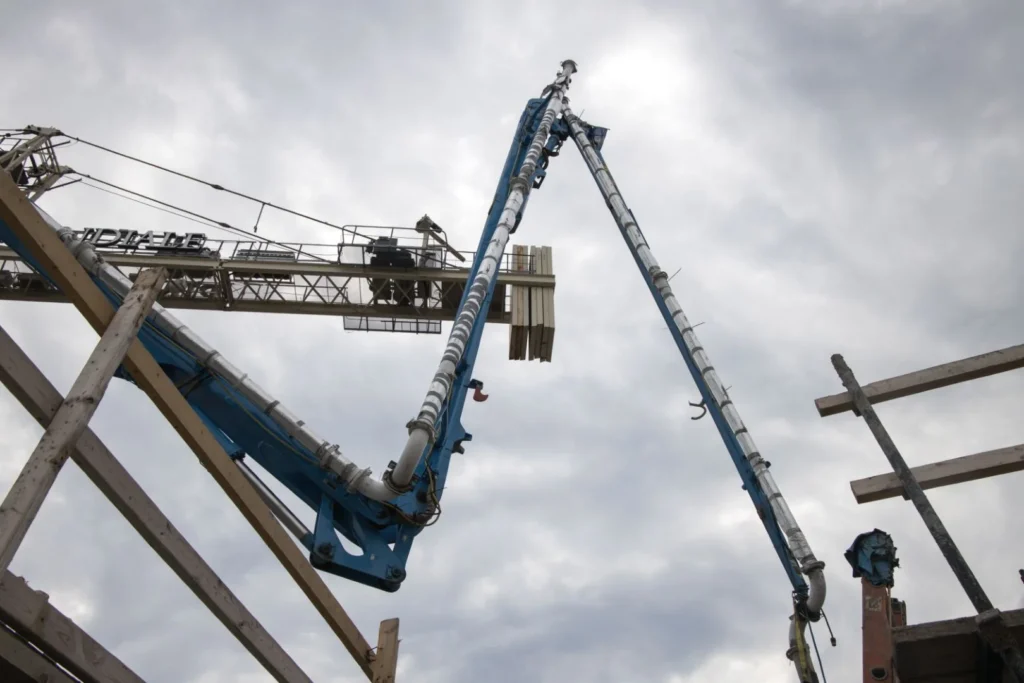
Insulated Equipment: We wrap all of our boom pumps with insulated materials to prevent freezing in the lines and booms.
Temperature Monitoring: Our operators constantly track mix and ambient temperatures throughout the job.
Additives When Needed: In coordination with your ready-mix supplier, we may recommend accelerators or other admixtures to help regulate curing in low temperatures.
Curing Guidance: We work with your crew to ensure proper curing blankets and coverings are used once the pour is complete.
Efficient Setup: Using our Work Site Preparation Guide, we streamline setup to minimize downtime in freezing conditions.
These steps ensure your concrete maintains its integrity and finishes strong — even in the middle of an Ontario winter.
Practical Tips for Contractors Pumping in Cold Weather
Here are a few best practices every contractor should follow before starting a cold-weather concrete pour:
Plan around temperature windows. Try to pour during the warmest part of the day, between late morning and early afternoon.
Use heated water or warm aggregates in your mix when ambient temperatures are below 5°C.
Preheat forms or subgrades using heaters or blankets to prevent rapid cooling of the concrete.
Avoid adding extra water to the mix — it increases freezing risk.
Insulate hoses and fittings to prevent blockages in longer line runs.
Cover and cure. Use curing blankets immediately after surface finishing to trap warmth and moisture.
If you’re using a line pump, be especially cautious about temperature drops that could affect long hose runs.
When Is It Too Cold to Pump Concrete?
At Premier Concrete Pumping, we pump until about -30 degrees Celsius. Below that, it is too cold for our operators to be out in the cold for that long, and the concrete would most likely freeze.
If temperatures fall rapidly after the pour, the surface layer can freeze before proper curing begins — leading to scaling or reduced strength. Our team will assess each project individually and recommend whether conditions are suitable for pumping.
Common Cold-Weather Pumping Questions
1. Can I pour concrete below freezing?
Yes, but only with proper planning. Below 0°C, use heated water, curing blankets, and insulated hoses to prevent freezing.
2. Does cold weather make pumping harder?
Actually, pumping is easier — concrete flows better in cooler conditions because it stays lubricated longer.
3. How do you stop concrete from freezing in the lines?
We wrap all boom pumps with insulation, keep material moving constantly, and perform blowouts immediately after each job.
4. What if the ground is frozen?
Never pour on frozen subgrade. The thawing process later can cause uneven settling and cracking.
5. How long does curing take in cold weather?
Expect curing to take up to twice as long, depending on mix design and temperature.
Related Articles
Final Thoughts
Cold weather doesn’t mean your concrete project has to stop — it just means you need the right team and the right preparation.
At Premier Concrete Pumping, we’ve mastered the art of winter pours across Ontario. From insulated pumps and controlled setups to expert operators who understand temperature management, we ensure your concrete is placed safely and performs for decades to come.
Ready to plan your next cold-weather pour? Contact our team today to schedule a consultation.