If you’re planning a high-rise project in Ontario and wondering when a mobile boom pump is no longer enough, this guide will give you clarity. In most cases, you need a placing boom once your building grows beyond the safe and practical reach of even the largest boom truck — especially if you want consistent production, reduced crane dependency, and a system that climbs with your structure.
At Premier Concrete Pumping, we’ve supported major high-rise towers across Ontario that ran for multiple years with self-climbing placing booms. If you’re unfamiliar with general pumping setups, you can start by reviewing what concrete pumping is before diving into high-rise applications.
What Is a Placing Boom?
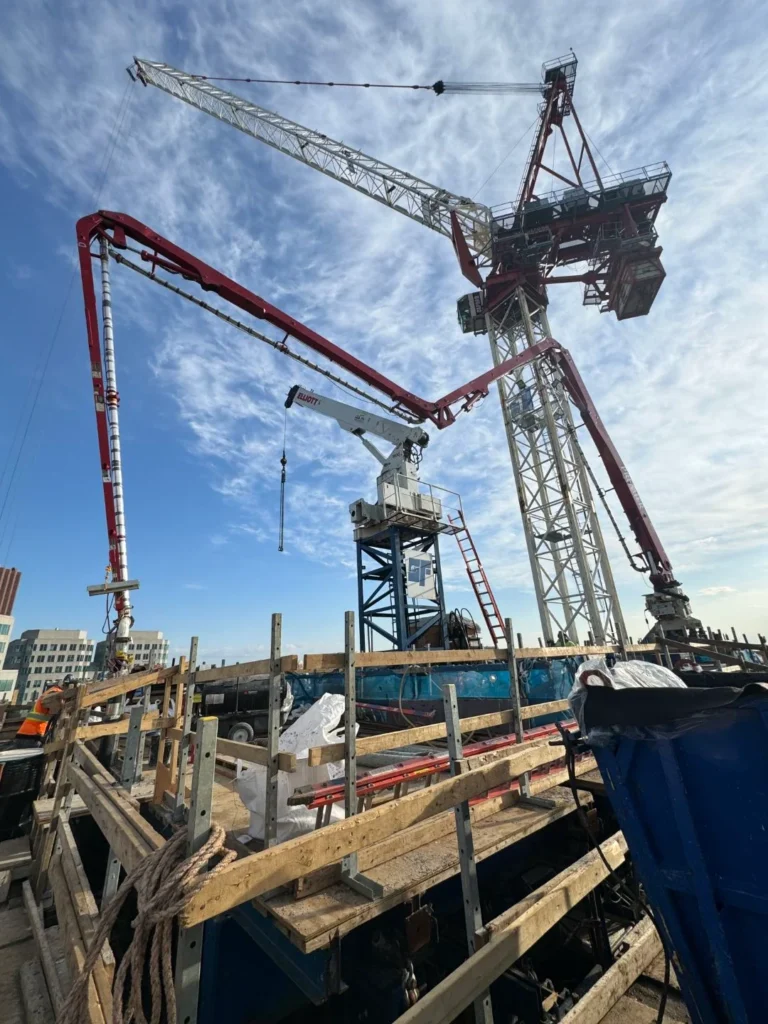
A placing boom is a stationary concrete placement system used on high-rise structures once traditional mobile boom pumps can no longer reach upper floors. Instead of being mounted on a truck, it is fixed to the building’s core and climbs upward as the structure rises.
Concrete is pumped from ground level through a vertical steel pipeline system directly to upper floors, providing consistent placement as the building grows. If you’d like to understand how different pumping systems compare, you can read our guide on boom pump vs line pump differences.
The Clearest Sign You Need a Placing Boom
The simplest answer is this: when your largest mobile boom pump cannot safely or efficiently reach your pour location anymore.
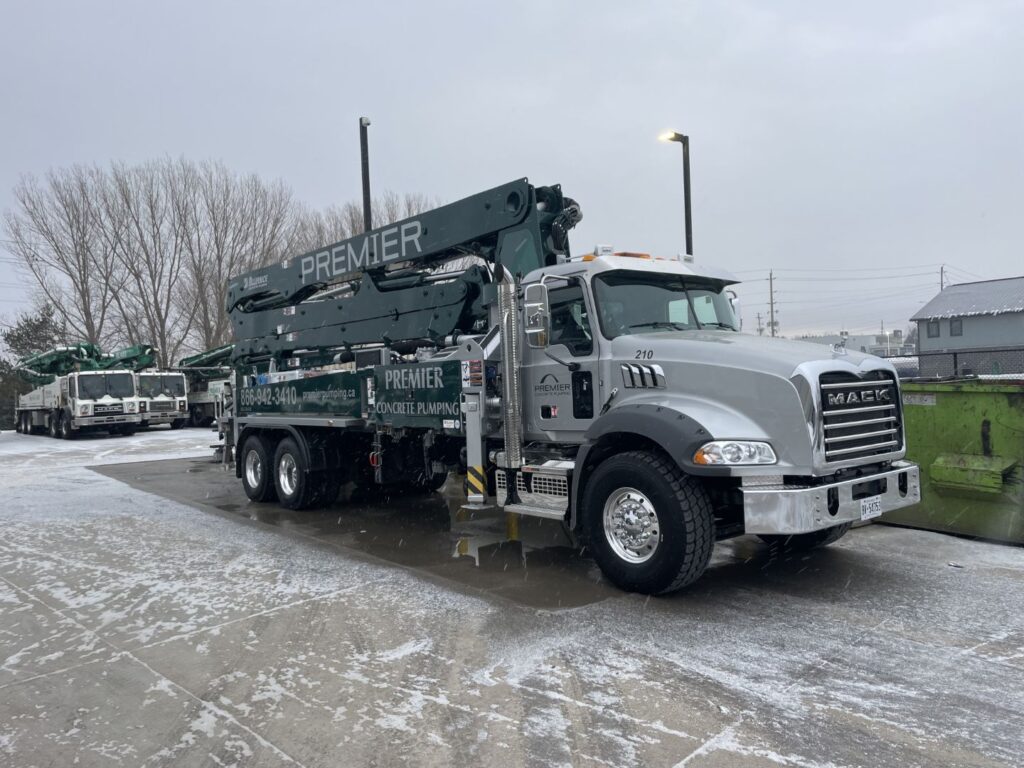
On most high-rise builds, mobile boom pumps handle early floors. Once the tower exceeds their maximum vertical reach, a placing boom becomes the professional solution. You can also see how reach impacts equipment choice in our article on how far a boom pump can reach.
7 Real-World Situations Where a Placing Boom Becomes the Smart Choice
- You’re building past the practical reach of boom trucks. High-rise schedules demand a placement strategy that works as the structure climbs. A placing boom is designed to stay with the building long-term.
- You need steady production floor after floor. High-rise pumping often involves significantly larger daily volumes than standard mobile work. A placing boom supports higher output consistently without rethinking logistics every few floors.
- You want to reduce crane time tied up with concrete placement. When properly installed, a placing boom reduces your reliance on crane buckets for concrete. This frees crane time for structural picks and keeps your project moving.
- Your project is a long-duration high-rise. Placing booms are typically installed for one to three years depending on tower height and schedule.
- Your floor plate is wide and coverage matters. Wider buildings may require greater maneuverability or even multiple placing booms for full coverage.
- You’re working at serious height and safety planning is critical. At height, precise boom control and communication are essential. You can review our health and safety standards to understand how we approach high-rise work.
- You need a system that climbs with the building. Self-climbing placing booms are attached to a mast on the building core and raised using a hydraulic jacking process as floors are added.
How Self-Climbing Placing Booms Work
At Premier Concrete Pumping, we primarily use 36-meter and 38-meter self-climbing placing booms for high-rise construction. These are mounted to a mast system fixed to the building’s core and are raised floor by floor as construction progresses.
To understand how this differs from standard setup procedures, you can review our detailed breakdown on high-rise concrete pump setup.
How Long Does a Placing Boom Stay on Site?
Unlike mobile pumps that arrive for the day and leave after cleanup, a placing boom becomes part of your vertical build system. On major projects, they often remain installed for a year or more — sometimes multiple years.
This long-term presence is why planning and volume forecasting are so important from the beginning.
How Is the Vertical Pipeline System Set Up?
Concrete is pumped from ground level through a vertical steel pipeline attached to the building’s core. As the building rises, additional pipe sections are installed to extend the system upward.
If you’re unfamiliar with vertical pumping challenges, our guide on preventing concrete line blockages explains how proper planning keeps flow smooth.
Does the Concrete Mix Change for a Placing Boom?
In most cases, no — as long as the mix is pumpable. The ground pump feeding the placing boom is designed for high-pressure vertical pumping.
Weather conditions can still impact your pour, especially in Ontario. We recommend reviewing cold weather pumping considerations or ideal temperature guidelines for pouring concrete if your project spans seasonal shifts.
When Should You Book a Placing Boom?
The earlier, the better. Placing booms require coordination for crane lifts, mast installation, and vertical pipeline setup. We recommend at least three weeks of notice whenever possible.
If you’re unsure when to schedule, our article on when to book a concrete pump can help you plan your timeline.
What Information Do We Need to Quote a Placing Boom?
To provide an accurate quote, we typically need:
- Structural or architectural drawings
- Total projected concrete volume
- Estimated daily pour volume
- Floor plate dimensions
- Projected build timeline
Many placing boom projects can be quoted remotely based on drawings and scope. If you’re ready to start planning, visit our contact page and send over your project details.
How Is a Placing Boom Project Priced?
Placing boom projects are primarily volume-based rather than hourly. Meter charges typically outweigh labor charges, and total projected volume plays a major role in pricing.
Every high-rise differs in height, duration, and logistics, so pricing is tailored to your specific scope.
Final Thoughts
A placing boom isn’t simply “bigger equipment.” It’s a long-term vertical placement strategy for serious high-rise construction.
If your tower is climbing past mobile boom reach, involves significant daily volume, or requires multi-year coordination, a self-climbing placing boom becomes the professional solution.
If you’re planning a high-rise project anywhere in Ontario, explore our equipment options or contact Premier Concrete Pumping early so we can help you design the right placement strategy before schedule pressure begins.