Concrete construction has come a long way. Today, most major projects—bridges, highways, high-rise buildings, and industrial structures—use a combination of precast and cast-in-place concrete to build faster, safer, and with greater accuracy.
If you work in infrastructure or commercial construction, you’ve already seen this hybrid approach in action:
Precast pieces brought in and placed by crane
Cast-in-place concrete used to tie everything together, fill gaps, grout connections, and complete the structure
This is where Premier Concrete Pumping comes in. While other contractors install the precast sections, we handle the precision grout pours, infill concrete, and small cast-in-place placements that finish the job and bring the entire structure together.
In this article, you’ll learn the differences between precast and cast-in-place concrete, where each is used, and how Premier supports the entire build process.
What Is Precast Concrete?
Precast concrete is concrete that’s poured, molded, and cured off-site in a controlled factory environment. Once fully cured, these pieces are transported to the job site and installed by crane.
Think of it like building with giant Lego pieces:
Columns
Bridge segments
Piers
Retaining wall panels
Beams, girders, double tees
Precast stair flights
Structural jail components
Vaults, culverts, manholes
These components arrive ready-made, uniform, and extremely strong.
Benefits of Precast Concrete
High quality control (factory curing)
Fast installation once on site
Reduced on-site labor
Minimal weather impact
Consistency in strength and finish
Because precast is manufactured indoors, it isn’t affected by jobsite variability—temperature changes, rain, moisture, etc. This makes it ideal for large, repetitive structural pieces like bridges and industrial buildings.
What Is Cast-in-Place Concrete?
Cast-in-place concrete is poured directly on-site into formwork. This includes:
Slabs
Walls
Beams
Reinforced columns
Custom stairs
Foundations
Structural infill
Restoration patches
Cast-in-place is flexible. If a shape changes, if a detail shifts, if reinforcement needs tweaking—your crew can adjust on site.
Benefits of Cast-in-Place Concrete
Greater design flexibility
Monolithic, continuous structure
Ideal for custom dimensions
Perfect for restoration and repair work
Stronger bond with existing concrete
If precast is “plug-and-play,” cast-in-place is “craft and customize.”
Why Most Projects Use Both
Modern infrastructure rarely uses one method alone. A bridge, for example, might have:
Precast deck slabs
Precast girders
Precast pier caps
Precast barriers
Precast stairs
Cast-in-place diaphragms
Infill pours
Grout between segments
Structural closure pours
Repairs / reinforcement
This means there are always gaps, joints, pockets, and connection points that need to be filled with precision.
And that’s exactly where Premier comes in.
Premier’s Role in Precast Projects
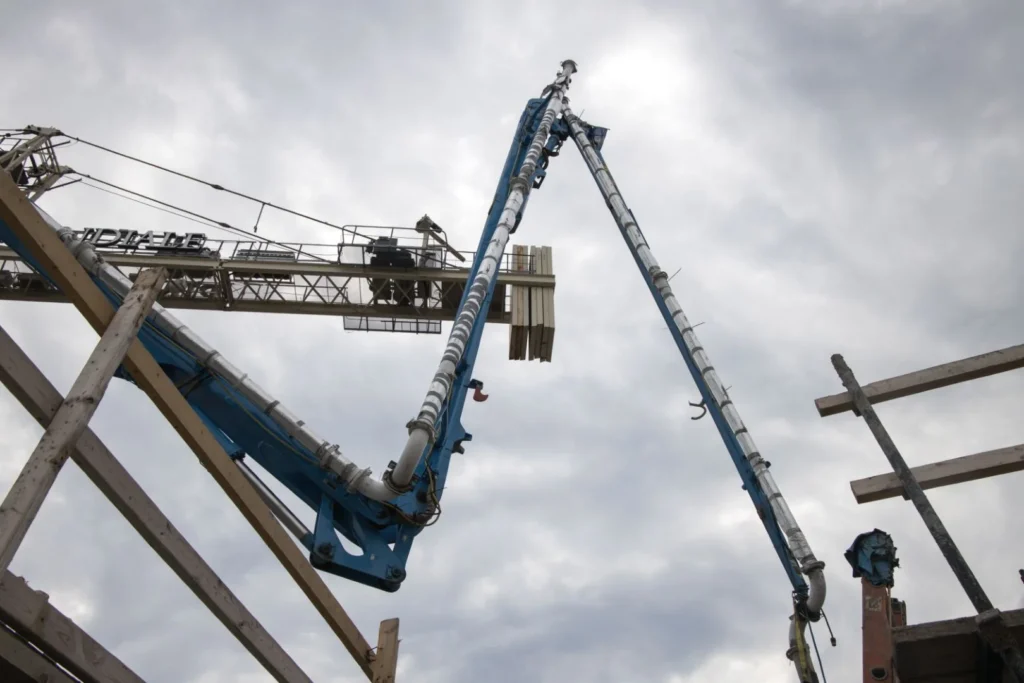
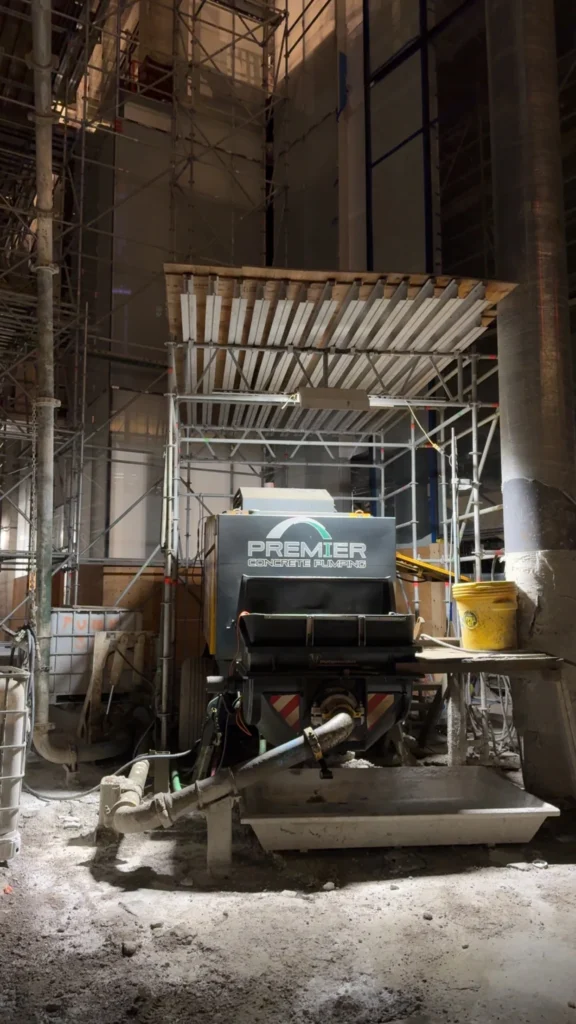
Using our boom pumps and line pumps, we handle the critical concrete pours that tie precast pieces together. These aren’t large-volume pours—these are precision pours:
Grout joints
Closure pours
Pocket fills
Shear key fills
Bearing pad infills
Pier cylinder fills
Stair interface pours
Restoration patches and strengthening layers
These pours require:
Tight control
Low-volume accuracy
Specialized hose sizes
Smaller pumps in tight access situations
Experienced operators
Excellent communication with the precast installation team
Examples from Premier’s Work
Gardiner Expressway Restoration (Toronto)
SONCIN Construction installs the precast bridge components.
Premier comes in behind them to fill the joints, perform the closure pours, and grout the critical connection points holding the sections together.
Bridge Piers
When precast pier cylinders are placed, Premier fills them to reinforce the structure and complete the load path.
Stairs
Whether stairs are precast or cast on-site:
Precast → Premier fills and secures the connections
Cast-in-place → Premier pumps the concrete for the full stair build
High-Security Facilities (including jail projects)
Many cell components and structural elements arrive precast. Premier completes the structural infill that locks everything together.
Scheduling
Once precast is installed, we arrive within 1–2 days to perform the grout and finishing pours—keeping the entire construction schedule moving.
When Cast-in-Place Is the Better Choice
While precast speeds up installation, it’s not the right choice for everything.
Cast-in-place is better when:
The structure needs a continuous, monolithic pour
There are lots of custom shapes or tight formwork
You’re dealing with repairs or restoration
The layout changes between levels (e.g., high-rise cores)
You need to bond new concrete to an existing structure
The area is too tight or irregular for precast elements
Premier specializes in cast-in-place pumping for:
Balcony restorations
Suspension bridge repairs
Tunnel walls
Basement underpinning
Custom features like retaining walls or architectural steps
For large-scale vertical pours, see our article on Pump Setup for High-Rise and Multi-Storey Projects.
The Grouting & Infill Process (Premier’s Expertise)
Grouting between precast pieces is one of the most precision-dependent tasks in concrete construction. Here’s how we do it:
Step 1: Assess the Joints
We look at:
Joint width
Depth
Access
Hose routing
Pressure limitations
Surface stability
If the area is tight, we use small-diameter lines (2” or 3”) to keep control.
Step 2: Select the Right Pump
Line pump for low-volume precision
Boom pump for hard-to-reach elevation changes
See how far each pump can reach here:
How Far Can a Boom Pump Reach?
How Much Distance Can a Line Pump Push Concrete?
Step 3: Choose the Right Mix
Grout must be:
Highly flowable
Pumpable through small lines
Consistent with no aggregate separation
(If you’re not sure what mix size you need, see Choosing the Right Concrete Mix and Pump Line Size.)
Step 4: Place with Precision
Operators adjust:
Pump pressure
Hose positioning
Line routing
Flow rate
This prevents overfilling, cracking, or displacement of precast elements.
Step 5: Cleanout & Inspection
All leftover grout is flushed using onboard water and air systems.
Cleanouts must be done immediately to prevent setting inside lines.
Learn more about our process here:
How to Prevent Concrete Line Blockages.
Precast vs. Cast-in-Place: Pros and Cons
| Precast Concrete | Cast-in-Place Concrete |
|---|---|
| Made off-site | Made on-site |
| Highly consistent | More variable but flexible |
| Fast installation | Longer installation time |
| Less disruption | Requires formwork and staging |
| Limited customization | Highly customizable |
| Ideal for bridges, stairs, piers, jails | Ideal for slabs, foundations, custom shapes |
| Needs cast-in-place grout to finish | Stands alone once poured |
Most projects use both because they complement each other perfectly.
Why Premier Is Essential for Hybrid Projects
Premier isn’t the crew installing precast pieces—that’s done by structural contractors like SONCIN Construction.
We’re the team that makes precast complete.
Our work ensures:
Structural integrity
Proper load transfer
Water resistance
Reinforcement continuity
Long-term durability
Without the critical small pours, grout joints, and infill work, precast structures wouldn’t function as intended.
This makes Premier one of the most important last steps before the project moves forward.
Frequently Asked Questions
1. What’s the main difference between precast and cast-in-place concrete?
Precast is made off-site; cast-in-place is poured on site. Most major builds use both.
2. How soon can you grout after precast installation?
Typically within 1–2 days, depending on scheduling and site readiness.
3. What mix is used for grouting precast joints?
Highly flowable, pumpable grout with small aggregate or sand-based mixes.
4. Do you use smaller hose sizes for grouting?
Yes—2”, 3”, or 4” depending on the cavity size and mix design.
5. What pump type is best for this work?
Most of the time: line pumps for precision.
On elevation changes or large distances: boom pumps.
6. Do weather conditions affect grouting?
Cold weather may require insulated hoses or additives.
See Pumping Concrete in Cold Weather.
7. Do you handle restoration pour work?
Yes—bridges, balconies, tunnels, piers, and infrastructure repair work are all part of our services.
Related Articles
Conclusion
Precast and cast-in-place concrete aren’t competing methods—they work together. Precast gives speed and consistency. Cast-in-place adds strength, customization, and the essential finishes that bring a structure together.
And between those two methods, Premier Concrete Pumping is the bridge—literally and figuratively.
From precision grout pours to complex infill work on bridges, expressways, piers, stairs, jails, and restoration projects, our pumps and operators complete the structural picture that makes precast systems perform.
Need a pump crew that understands precast connections, grout work, and complex infill pours?
Contact Premier Concrete Pumping and let’s finish your project right.