How Many Operators Do You Need for a Concrete Pump Job?
When booking a concrete pump, one of the most common questions we get is: “Do I really need more than one operator?”
The answer depends not on the type of job you’re doing — residential, ICF, or commercial — but on the complexity of the setup. At Premier Concrete Pumping, we staff every job strategically so it runs safely, efficiently, and without delays.
Here’s how we determine how many operators your project really needs — and why having the right crew size can save you both time and money.
It’s Not About Job Type — It’s About Job Complexity
Every job is unique. Some setups require minimal effort, while others involve elevation changes, tight spaces, or multiple hose sections. That’s why crew size isn’t based on whether the job is residential or commercial — it’s based on distance, access, and maneuverability.
For example, a short driveway pour may only need one operator. But if we’re working inside a building, climbing several floors, or extending a 400-foot line, extra operators are essential for safety and efficiency.
Crew Size for Line Pumps
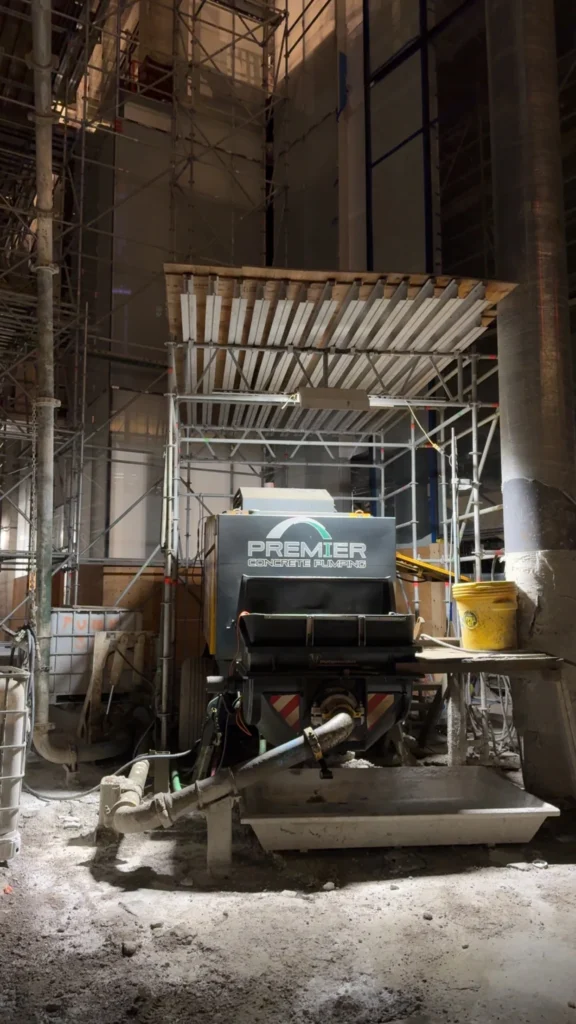
Line pumps are labor-intensive, especially when handling long distances. The more hose you run, the more hands you need to manage, monitor, and clean the line during and after the pour.
Here’s our general breakdown:
| Distance (ft) | Operators Needed | Reason |
|---|---|---|
| 0–150 ft | 1 operator | Short run, manageable setup and cleanup. |
| 150–200 ft | 1 operator (with help from crew) | Still feasible for one operator but starts requiring assistance. |
| 200–300 ft | 2 operators | One sets up and pumps, the other manages line removal and washout. |
| 300–400 ft+ | 3 operators | Long runs require constant coordination and supervision for flow, pressure, and hose recovery. |
For example, during a 400ft pour, one operator will manage the pump, another will monitor the middle section for kinks or blockages, and a third will help pull and clean hose sections as the pour progresses.
“Once we hit 200ft, we need a second operator because we have to set up all the line. As we’re pumping, we’re taking pieces off and washing them, making our way backward. 200ft+ is a lot to wash and track for one person.” — Sarah, Premier Concrete Pumping
This process ensures the system stays clean, reduces downtime, and protects both the equipment and your project’s schedule.
For more guidance on how line pumps work, read our article on How Much Distance Can a Line Pump Push Concrete.
Crew Size for Boom Pumps
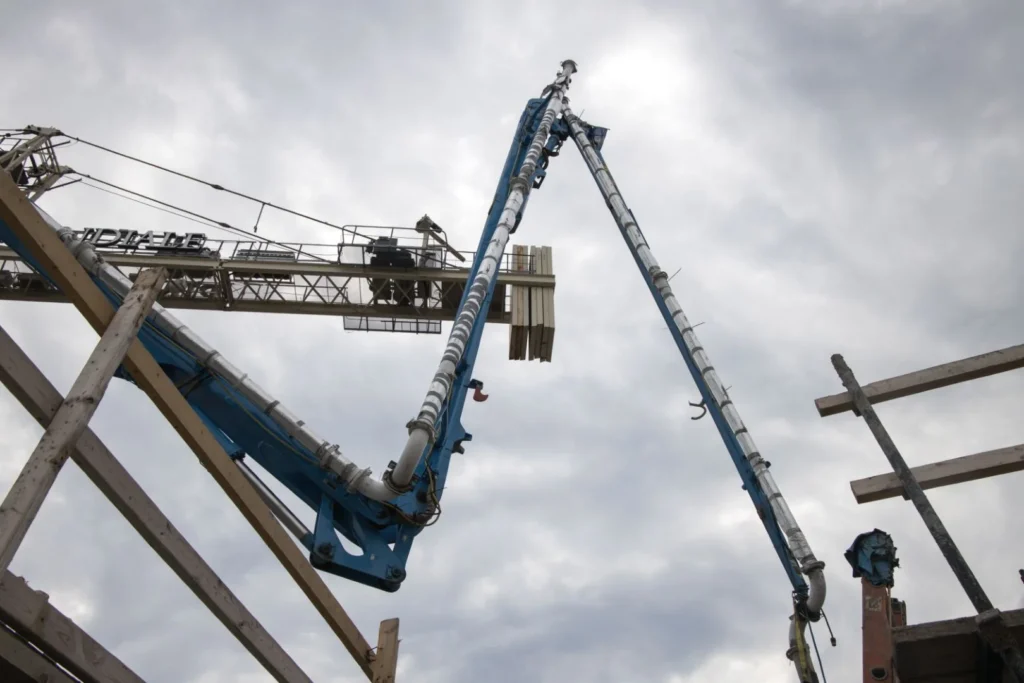
Boom pumps are faster to set up, but when working in tight or complex environments, additional operators are often necessary to keep things safe and precise.
| Boom Size | Operators Needed | Reason |
|---|---|---|
| Under 47m | 1 operator | Standard setup; maneuverability is manageable. |
| 50–65m | 2 operators | One drives and sets up the boom, another assists with positioning, safety, and visibility. |
For example, if we’re using a 47m boom pump and need to go up and into a building, we’ll send two operators — one to control the pump at ground level, and another positioned inside to maneuver the end hose safely.
With larger booms (50–65m), the second operator also helps direct the driver during setup to avoid obstacles and ensure the outriggers are positioned properly. On crowded construction sites, this teamwork is essential to avoid equipment damage and improve efficiency.
Why Extra Operators Save You Time and Money
It might seem like adding more crew members increases cost, but in reality, it reduces the risk of costly delays.
Here’s how:
-
Faster setup and cleanup: More hands mean less downtime before and after the pour.
-
Improved safety: Having multiple trained eyes reduces the risk of clogs, line bursts, or equipment accidents.
-
Better communication: Operators can coordinate hose movements across different elevations or floors.
-
Less wear and tear on equipment: Properly managed lines last longer and perform better.
For large or complex pours, those benefits far outweigh the minimal increase in labour cost.
Real-World Example
Let’s say you’re pumping concrete for a multi-level mezzanine using a 47m boom.
-
Operator 1: Sets up and runs the pump from ground level.
-
Operator 2: Manages the end hose on the second floor, ensuring proper placement and steady flow.
Without the second operator, communication delays or visibility issues could slow the pour — or worse, cause hose whipping or uneven placement. Having that extra set of hands ensures smooth coordination and keeps the site safe.
Weather Doesn’t Change Crew Size
While temperature and weather can affect mix design or curing time, they don’t influence operator requirements.
Crew size is always determined by:
-
The complexity of the setup
-
The length of the hose run
-
The size and reach of the boom pump
This consistency helps us maintain both quality and safety on every project, no matter the season.
If you’re working in winter, though, check out our article on Pumping Concrete in Cold Weather for tips on keeping your pour smooth and strong.
Frequently Asked Questions
1. How many people are typically on a concrete pumping crew?
Usually one to three, depending on setup complexity and distance.
2. Why do I need two operators for my job?
Two operators ensure safety, efficiency, and proper hose management — especially for multi-story or long-distance pours.
3. Does having more operators increase my cost?
Not significantly. It actually prevents delays and equipment damage, which can cost far more in the long run.
4. Do weather conditions affect the number of operators needed?
No, operator count is based on job setup, not temperature.
5. How many operators are needed for line pumps?
-
Up to 150ft → 1 operator
-
200ft → 2 operators
-
300ft+ → 3 operators for efficiency and safety
6. How many operators are needed for boom pumps?
Under 47m → 1 operator; 50m and up → 2 operators.
Related Articles
-
How Much Distance Can a Line Pump Push Concrete
Final Thoughts
The right number of operators isn’t just a staffing decision — it’s what ensures your pour goes smoothly, safely, and efficiently.
At Premier Concrete Pumping, we always match crew size to job complexity, not job type. Whether it’s a short residential pour or a 65m commercial boom setup, our operators coordinate every step to guarantee steady flow, clean results, and zero downtime.
Need help planning your next pour? Contact our team and we’ll recommend the right setup and crew for your project.