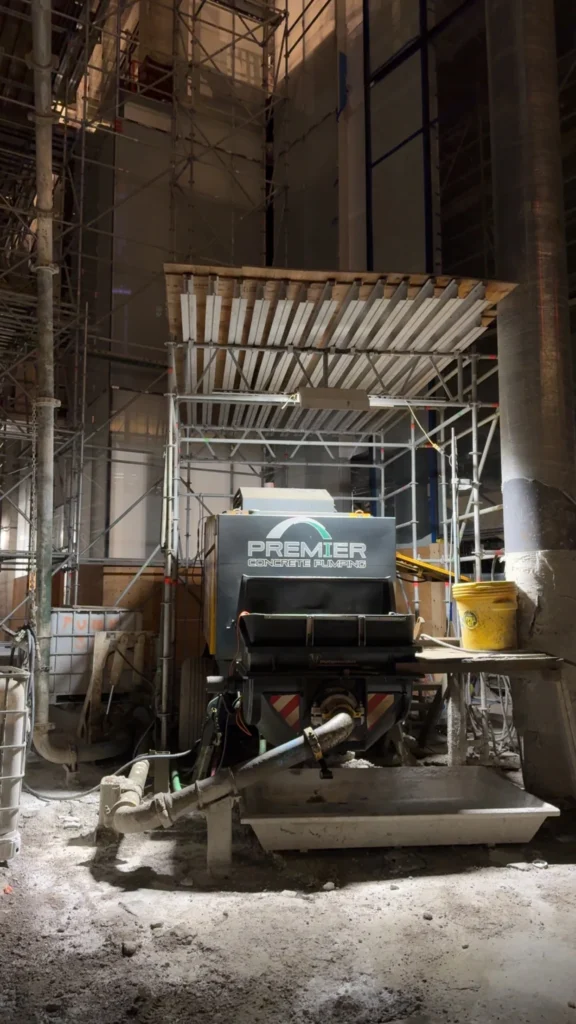
When it comes to small or hard-to-reach pours, a line pump is often the most flexible and efficient solution. But how far can it really push concrete? At Premier Concrete Pumping, our fleet of line pumps can deliver concrete up to 500 feet from the pump — making them ideal for basements, backyards, and tight job sites where a boom pump can’t reach.
In this guide, we’ll break down how line pumps work, their maximum pumping distance, and which of our models best suit your project.
What Is a Line Pump and When Should You Use One?
A line pump (also known as a trailer or tow-behind pump) uses steel or rubber hoses connected end-to-end to transport concrete horizontally or vertically. These pumps are especially useful for:
Tight access sites where a boom truck can’t fit
Basement pours or below-grade work
Backyards or indoor projects with limited height clearance
Tunnels, balconies, and restoration work
Because line pumps use flexible hoses, they can snake around obstacles and deliver concrete to hard-to-reach places that would otherwise require manual labour.
If you’re new to pumping, check out our guide on How to Use a Boom Pump or Line Pump for the First Time — it covers everything you need to know about preparing your site and working with our operators.
How Far Can a Line Pump Push Concrete?
Our line pumps can push concrete up to 500 feet depending on the mix design, hose diameter, and elevation changes. For most residential or small commercial pours, 200–300 feet is typical.
Here’s a breakdown of how we staff our pumping operations based on distance:
| Pumping Distance | Number of Operators | Typical Application |
|---|---|---|
| 0–200 ft | 1 operator | Standard small pours, basements, driveways |
| 200–300 ft | 2 operators | Long backyard or side access projects |
| 300–500 ft | 3+ operators | Large residential, tunnels, or steep elevation changes |
Line pumps maintain consistent pressure over long distances by using high-output hydraulic systems and small-diameter steel or nylon hoses. If your project requires multiple elevation changes or sharp bends, our team adjusts hose configuration and flow pressure to ensure smooth placement.
Our Line Pump Fleet
At Premier Concrete Pumping, we offer two main types of line pumps — tow-behind units and truck-mounted models — each designed for specific project needs.
Tow-Behind Pumps (TK & BSA Models)
Our tow-behind units from Putzmeister are the industry standard for performance and reliability. These models offer:
Line sizes: 2”, 3”, and 4”
Versatile output control for everything from grout to large aggregate mixes
Spray nozzle options for shotcrete and slope stabilization
With these configurations, our operators can pump nearly any mix, whether it’s a low-slump structural mix or a lightweight topping.
For full specs, visit our Trailer & Line Pump Services page.
JMP-60 All-In-One Truck Mounted Line Pump
Sometimes, space doesn’t allow for both a truck and trailer combo. That’s where the JMP-60 All-In-One comes in.
This 26’6” long truck-mounted pump is compact enough for tight access jobs but still delivers an impressive 83 yards per hour. It’s a great option for projects needing maneuverability without sacrificing power — such as inner-city builds or confined residential areas.
Line Pump Setup and Best Practices
Before the pump arrives, preparation is key to ensuring the job runs smoothly. You can refer to our Work Site Preparation Guide for a full checklist, but here’s a quick summary:
Clear the path from the truck to the pour area.
Ensure a flat, stable surface for both the pump and hoses.
Avoid sharp bends or steep slopes in the hose route.
Coordinate manpower — especially for longer runs where multiple operators are needed.
Keep the pour area clean to speed up post-job cleanup.
For shorter distances, one operator can handle both setup and pumping. But for longer runs over 200 feet, extra operators help maintain line flow, monitor pressure, and guide the hoses safely around obstacles.
Choosing the Right Hose and Line Size
The hose diameter depends on your concrete mix and aggregate size. Using the wrong size can lead to pressure loss or clogs.
| Hose Diameter | Best For | Notes |
|---|---|---|
| 2” line | Grout, mortar, small aggregate | Easy to handle, great for tight spots |
| 3” line | Standard concrete mixes | Most commonly used size |
| 4” line | Large aggregate, high output | Requires more setup space and pressure |
For guidance on selecting the proper hose size for your mix, read our article on Choosing the Right Concrete Mix and Pump Line Size.
Why Line Pumps Are So Efficient
Line pumps may not have the dramatic reach of boom pumps, but they make up for it with versatility and precision. Their smaller footprint means:
Less setup time
Easier cleanup
Access to restricted areas
Lower overall cost for small pours
That’s why 90% of small residential or renovation projects benefit from line pumping over other delivery methods.
When to Use a Boom Pump Instead
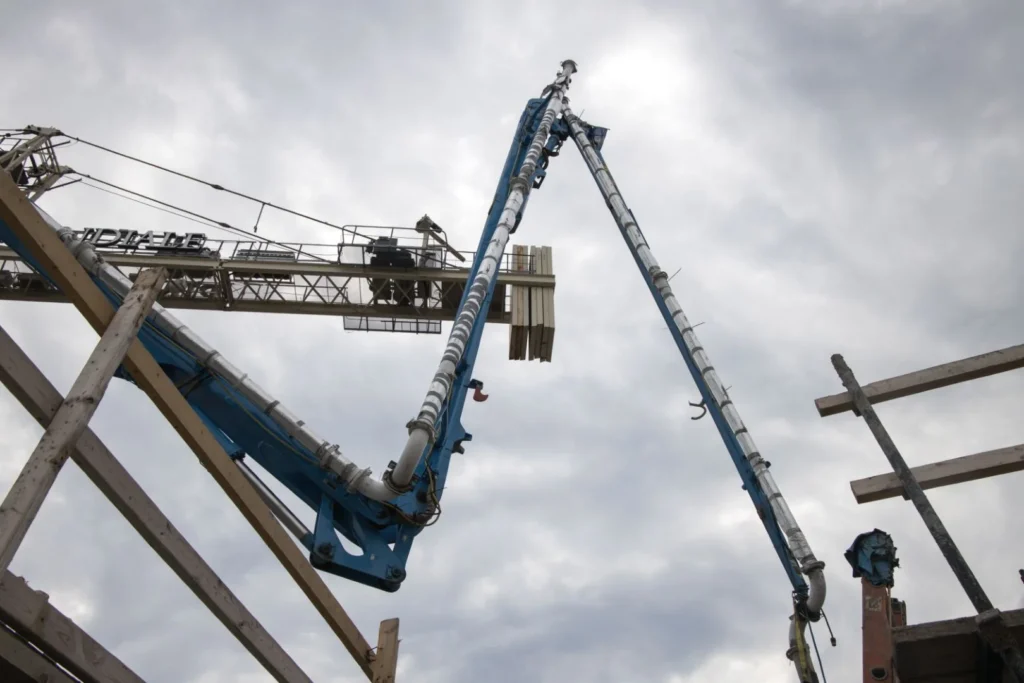
If your pour area is wide open or requires placement at a high elevation, a boom pump might be more efficient. Boom pumps can reach up to 210 feet vertically and cover large areas with fewer setups.
You can learn more about our fleet in How Far Can a Boom Pump Reach (And Which Size Should You Rent?).
Frequently Asked Questions
1. How far can your line pumps push concrete?
Up to 500 feet, depending on hose configuration, elevation, and mix type.
2. How many operators are required for a line pump job?
Under 200ft: 1 operator
200–300ft: 2 operators
300–500ft: 3+ operators
3. What type of projects are line pumps best for?
Line pumps are perfect for basements, backyards, tunnels, and restoration jobs where access is limited.
4. How do I choose between steel and nylon hoses?
Steel hoses handle higher pressure and longer distances, while nylon hoses are lightweight and flexible for smaller pours.
5. How fast can your line pumps deliver concrete?
Our JMP-60 All-In-One can pump up to 83 yards per hour, while tow-behind units can handle everything from grout to large-aggregate mixes.
6. How do I prepare for the pump’s arrival?
Clear the site, create a stable surface, and ensure there’s enough space for the truck or trailer.
7. Can line pumps handle self-consolidating or lightweight concrete?
Yes. With proper mix design, our pumps can handle nearly any specialty concrete mix.
Related Articles
Final Thoughts
When your project requires precision and reach without the footprint of a full boom pump, a line pump is the perfect solution. With up to 500 feet of pumping distance, compact setups, and the option for multiple hose sizes, our fleet can handle everything from basement slabs to backyard foundations.
At Premier Concrete Pumping, every job includes a trained operator to ensure a safe, smooth pour. Contact us today to learn which line pump best fits your next project.