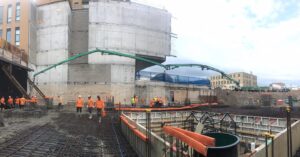
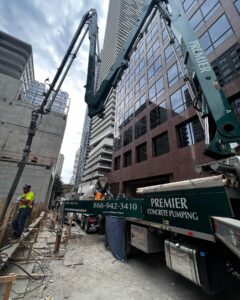
The best temperature to pour concrete is between 10°C and 21°C (50°F to 70°F). This is the ideal range where concrete cures at a stable, predictable rate, giving you the strongest, most durable results with minimal risk of cracking, scaling, or weak surface strength. While concrete can be poured outside this range, temperatures below 4°C (40°F) or above 32°C (90°F) require special precautions, mix adjustments, and strict curing controls to avoid long-term problems.
In this article, you’ll learn exactly how temperature affects concrete, the minimum and maximum temperatures you can safely pour in, how hot and cold weather change pumpability, what Ontario contractors and Reddit pros recommend, and how Premier Concrete Pumping handles extreme-weather pours on bridges, high-rises, precast projects, and restoration work. You’ll also get a clear checklist of best conditions, warning signs, and practical adjustments to keep your pour strong no matter the season.
If you want more guidance on extreme conditions, also see:
The Best Temperature to Pour Concrete
For most slabs, walls, footings, grout pours, and precast tie-ins, the ideal air temperature is:
10°C to 21°C (50°F to 70°F)
This is the sweet spot where hydration happens at a stable, predictable rate. Concrete neither:
Sets too fast (high temperatures)
Sets too slow (cold temperatures)
Freezes before curing
This range produces the strongest, most durable concrete with consistent finishing times.
Minimum & Maximum Temperatures for Pouring Concrete
Minimum Temperature: 4°C (40°F) and rising
Anything colder risks:
Very slow strength gain
Surface scaling
Frost damage
Concrete freezing before initial set
Pump line freezing
Premier operators wrap boom and line systems with insulation as soon as temperatures drop—this prevents concrete from freezing inside the pipes mid-pour.
Maximum Temperature: 32°C (90°F)
Above this, you risk:
Rapid moisture loss
Crusting and surface defects
Cracks during finishing
Mix stiffening too quickly
Cold joints forming
Pump blockages if the mix begins to set in the line
How Temperature Impacts Concrete Curing
Hydration is temperature-dependent. Here’s what happens:
| Temperature | Hydration Effect | Result |
|---|---|---|
| Below 0°C (32°F) | Water freezes | Concrete fails |
| 0–4°C (32–40°F) | Hydration barely happens | Very weak |
| 5–10°C (41–50°F) | Slow hydration | Long curing time |
| 10–21°C (50–70°F) | Stable hydration | Strongest result |
| 22–30°C (72–86°F) | Fast hydration | Reduced workability |
| 30°C+ (86°F+) | Very fast hydration | Cracking + surface issues |
Humidity and wind can make temperatures feel “hotter” or “colder” to concrete by changing evaporation rates.
Hot Weather Concrete Pours (Summer Conditions)
Ontario summers regularly reach 30°C+ (86°F+), and that dramatically changes how concrete behaves.
Key Hot Weather Problems
Fast moisture loss → plastic shrinkage cracks
Surface crusting → poor finish
Short finishing window
Cold joints form faster
Pump lines risk clogging if concrete begins to set
Mix stiffens rapidly in the truck or hopper
How to Manage Hot-Weather Pours
Pour early mornings (5–11 AM)
Use retarders or water reducers
Mist the subgrade to reduce suction
Shade trucks if possible
Keep pump cycling during delays (every 5–10 minutes)
Use windbreaks
Increase curing efforts (spray curing, blankets, fogging)
For pump-specific advice, see:
Choosing the Right Concrete Mix and Pump Line Size.
Cold Weather Concrete Pours (Fall/Winter Conditions)
Premier sees many advantages in cool weather.
Cold Weather Advantages
Slower set → more finish time
Improved pumpability
Reduced risk of blockages
Higher long-term strength due to slow hydration
Cold Weather Risks
Concrete can freeze before initial set
Extended curing time
Frozen subgrade weakens the slab
Lines can freeze mid-pump
Need for insulated blankets
Premier protects against this by wrapping boom lines with insulation once temperatures drop into marginal ranges.
Learn more in:
Pumping Concrete in Cold Weather.
Best Time of Day to Pour Concrete
In Hot Weather
Early morning (5–11 AM)
Cool ground and lower sun load slow early hydration.
In Cold Weather
Late afternoon (3–7 PM)
Allows concrete to benefit from daytime warmth before nighttime cooling.
Avoid Midday Summer Pours
They are responsible for the majority of cracking and surface defects.
Best Months to Pour Concrete in Ontario
April–June
Moderate temperatures, low risk of freezing, ideal for slabs and structural pours.
September–October
Consistently within 10–21°C (50–70°F).
Reduced humidity helps control curing.
Avoid These Months When Possible
January–March → freeze risk
July–August → extreme heat + humidity
How Premier Manages Pours in Extreme Temperatures
Premier pours year-round on:
Bridges and expressways
High-rise floors
Tunnels and culverts
Precast grout and infill work
Piers and retaining walls
Restoration and rehabilitation projects
We maintain control using:
Insulated lines in cold weather
Heating blankets and controlled curing
Hot-water or warm mix specs
Admixtures (accelerators or retarders)
Correct hose sizing for hot/cold conditions
Onboard air/water blowout systems for fast cleanouts
Coordinated scheduling to avoid cold joints
Extra operators when conditions change pumpability
For precast/cast-in-place hybrid projects, see:
Precast vs. Cast-In-Place Concrete.
Checklist: Ideal Weather Conditions for Pouring Concrete
Best Conditions
10–21°C (50–70°F)
Low wind
Moderate humidity
No precipitation
Firm, non-frozen subgrade
Acceptable Conditions (with precautions)
4–10°C (40–50°F)
21–30°C (70–86°F)
Light rain (with tarps)
Light wind
Poor Conditions (delay if possible)
Air temperature below 0°C (32°F)
Subgrade frozen
High winds
Heavy rain or thunderstorms
Air temperature above 32°C (90°F) without mix adjustments
When You Should Delay Your Pour
Delay if:
Subgrade is frozen
Standing water cannot be removed
Weather forecast shows sustained heavy rain
High winds exceed 20 km/h
Nighttime temperatures will dip below freezing
Not enough manpower for rapid-set conditions
If unsure what crew size you need based on distance, weather, and pump type, see:
How Many Operators Do You Need for a Concrete Pump Job?.
Frequently Asked Questions
1. What temperature is too cold to pour concrete?
Below 4°C (40°F) without thermal protection.
Below 0°C (32°F) requires heated enclosures.
2. What temperature is too hot to pour concrete?
Above 32°C (90°F) is considered high-risk.
3. Can concrete be poured in winter?
Yes — Premier does it regularly.
But it requires:
Heated mix
Blankets
Insulated pump lines
Accelerators
Protected curing
4. Does humidity matter?
Yes.
Low humidity = fast evaporation → cracking
High humidity = slow cure → delays
Moderate humidity is ideal.
5. Can you pour concrete when it’s raining?
Light rain = OK with protection.
Heavy rain = postpone.
See full guide:
What Happens If It Rains During a Concrete Pour.
6. Should you pour concrete at night?
Only for heat mitigation, with proper lighting and manpower.
7. How does temperature affect pump performance?
Heat → higher risk of blockages
Cold → higher risk of freezing
Long hose runs in extreme temperatures require additional operators
See related:
How Much Distance Can a Line Pump Push Concrete?.
Related Articles
Conclusion
The ideal temperature to pour concrete is 10–21°C (50–70°F) — but with the right strategy, Premier Concrete Pumping can help you complete successful pours in temperatures ranging from -15°C to +35°C (5°F to 95°F).
Whether you’re dealing with heatwaves, freezing mornings, tight downtown sites, or schedule-sensitive bridge or high-rise pours, Premier’s operators know how to adapt your mix, your pump setup, and your curing strategy so the concrete reaches the strength it was designed for.
If you want help planning your next weather-sensitive pour, contact Premier Concrete Pumping anytime.