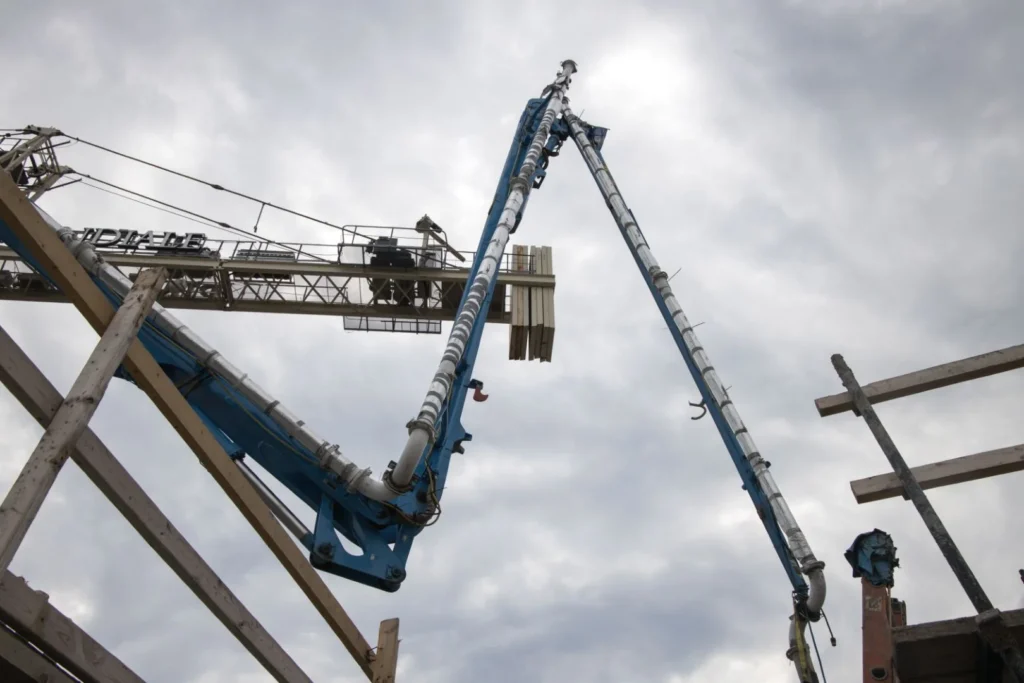
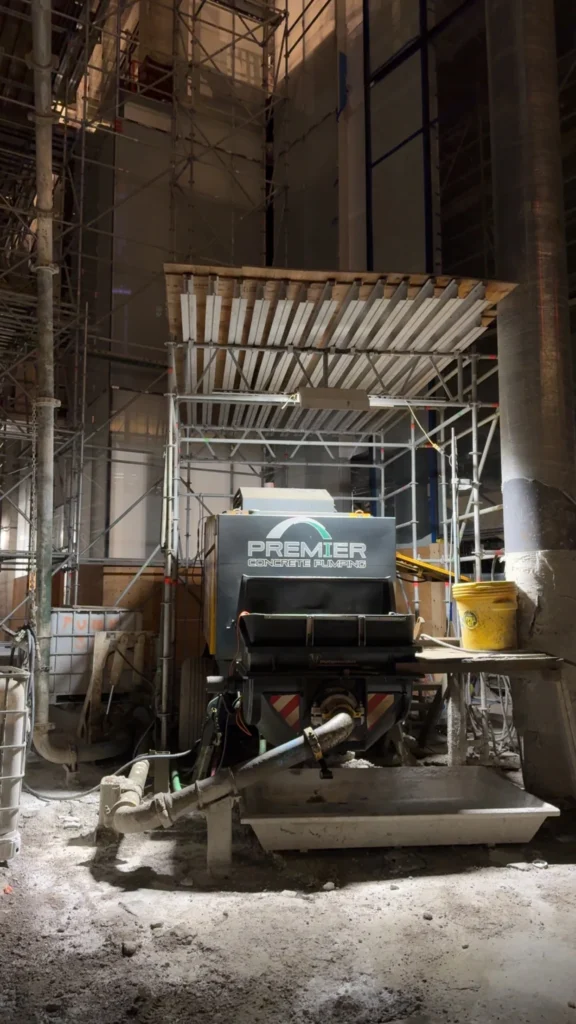
Remote and harsh pours in Ontario can absolutely be done if you plan the details early. In this guide, we break down what makes these jobs hard (access, travel time, poor setup areas), which pumps work best (often smaller line pumps or smaller booms), what information you must give us before we dispatch, and how we handle unusual setups like barges to islands, pumps pulled into forest paths, crane lifts, bridges, water treatment plants, and other infrastructure sites. You’ll also get checklists and tables you can use to plan your next pour with fewer surprises and less downtime.
Why “remote or harsh” changes everything
On a normal site, if something is missing, you can usually run to the store or grab a spare from another crew. On a remote job, that is not realistic. In Ontario, remote pours often mean long drives, unassumed cottage roads, limited turning radius, no staging space, and fewer options if the plan changes last minute. Harsh conditions can also mean messy, muddy new builds, tight setup zones, or unusual access like elevated work areas or enclosed structures.
That is why we treat remote and harsh sites like a logistics project, not just a pump booking.
If you want to see how we approach challenging setups in general, read our guide on complex access planning:
https://premierpumping.ca/concrete-pump-setup-complex-sites/
What counts as a remote or harsh job site in Ontario
Here are real examples of the kinds of “not normal” jobs discussed in the call:
-
Island cottage pours where the pump goes over by barge, then the barge shuttles concrete trucks back and forth (multiple trips)
-
Forest or path-only access where the truck cannot enter, so the line pump is disconnected and moved into position by other equipment
-
Muskoka and other cottage regions with unassumed roads and long travel time
-
A line pump lifted by crane onto a building to pump from the roof
-
Canada’s Wonderland work, including pumping inside “the mountain” area where access details matter a lot
-
Bridges, water treatment plants, and nuclear power plant work (Pickering was mentioned)
-
A recently quoted job near Niagara Falls where the plan was to park at the top and boom down close to 200 feet, then run line into a tunnel for repairs
If your project fits anything like the above, treat it as a remote/harsh pour and plan accordingly.
For projects that fall under remote operations, this page gives a high-level overview of how we support them:
https://premierpumping.ca/large-remote-concrete-pumping/
The biggest challenges you need to plan for
1) Setup area and footprint
Remote sites often have fewer flat, stable areas to set up. If you need a boom pump, you still need a safe setup zone for outriggers and safe swing clearance. If there is no footprint, you may need a smaller pump now, then upgrade later when a staging area is cleared.
If your job is more infrastructure-focused, you may also want to review:
https://premierpumping.ca/infrastructure-concrete-pumping/
2) Travel time and timing risk
Long travel time means your schedule needs more buffer. A small delay at the site can become a big problem if trucks are staged far away, ferries/barges are booked, or the access road closes earlier than expected.
3) Logistics and “you only get one shot”
Remote jobs come down to details. If a key detail is missed, you can lose hours. That includes where to park, how to reach the pour location, how much line is needed, and whether special handling (crane, barge, pulling equipment) is required.
What equipment works best on remote and harsh sites
Most remote jobs are easier with smaller equipment. We are not going to drive a 50–60m boom deep into bush terrain just to pour a cottage foundation. In many remote scenarios, a smaller line pump or smaller boom is the practical solution.
To understand our equipment options, start here:
https://premierpumping.ca/our-equipment/
And for line pumping specifically:
https://premierpumping.ca/concrete-pump-trailer-line-pump-services/
Quick selection table for remote/harsh Ontario pours
| Situation on Site | What Usually Works Best | Why |
|---|---|---|
| Narrow roads, tight driveways, cottage lanes | Tow-behind line pump | Easier to maneuver and stage |
| Truck can’t reach pour area (paths, bush, forest) | Smaller line pump with line routed in | You can move line where trucks can’t go |
| Need to reach down or across from a safe parking area | Boom pump (size depends on footprint) + possible line extension | Keeps truck in a safe zone while reaching the work |
| Work is inside a structure or unusual access area | Line pump with flexible hose sections | Flexible line routes around obstacles |
| Elevated access needed (roof work) | Line pump with crane lift (planned) | Works only if planned with proper rigging and staging |
All of these require planning before dispatch, especially anything involving disconnecting equipment or lifting by crane.
Mix design and line sizing on remote pours
On remote jobs, the concrete mix usually is not “special” just because it is remote. The mix depends on what you are building. What changes is how you plan for pumping distance and line size. Sarah pointed out that aggregate size must match the line size if the line is smaller.
If you want a full breakdown of mix and line size planning, use this guide:
https://premierpumping.ca/choosing-concrete-mix-and-pump-line-size/
A good remote-pour habit is to confirm these three items early:
-
What you are pouring (footing, slab, grout, repairs, tunnel patch, etc.)
-
Estimated line length from pump setup to placement point
-
Aggregate size in the mix and whether line diameter needs to change
What you must tell us before we arrive
Remote bookings go best when you give us everything up front. Here’s a Remote job intake checklist you can copy into your planning notes:
| Item | What to Provide | Why it Matters |
|---|---|---|
| True location | Exact address plus a pin/drop point and “how to find it” notes | Remote sites often have “address doesn’t exist yet” problems
How to Pump Concrete on Remote … |
| Setup location | Where the pump will park and how stable/flat it is | Determines pump choice and safe setup
How to Pump Concrete on Remote … |
| Reach and distance | How far from pump to pour point | Determines line length and accessories
How to Pump Concrete on Remote … |
| Access route | Road width, gates, slopes, soft ground, tight turns | Prevents stuck trucks and wrong equipment |
| Special logistics | Barge/boat schedule, crane access, machine needed to pull equipment | These cannot be “surprises” on arrival
How to Pump Concrete on Remote … |
| Extras required | Primer preference, extra line, washout bag | Needs to be staged before dispatch
How to Pump Concrete on Remote … |
| Concrete delivery plan | Truck staging area and sequence | Avoids idle time and helps pour flow |
| Site restrictions | Noise windows, park rules, airport rules, facility security | Impacts timing and approvals |
To coordinate quickly, you can also point your team to our contact page:
https://premierpumping.ca/contact-premier-concrete-pumping/
Planning for “out of the ordinary” access
Remote/harsh jobs often fail because someone says “it’s just a footing,” but leaves out the real constraint, like “the footing is inside a mountain,” or “the only access is by elevator and tunnel,” or “we need the pump separated from the truck and pulled into the bush.” Sarah was clear that these jobs can be done, but we need the full picture early.
If your project is a unique infrastructure repair, it may help to review our general infrastructure capabilities:
https://premierpumping.ca/infrastructure-concrete-pumping/
Safety and accountability on harsh sites
Safety practices do not “change” just because the job is remote. The difference is that remote work demands more awareness and better coordination with whoever is controlling access (like the barge operator, crane crew, or facility manager).
If your project requires formal safety documentation or compliance coordination, this page is a useful reference:
https://premierpumping.ca/health-safety/
Common mistakes that slow down remote pours
These are the issues that typically create delays:
-
The address is not real yet and nobody provides a pin or clear directions
-
The setup zone is not cleared, not flat, or not stable enough for safe staging
-
The contractor does not confirm how far the line must run, so the crew arrives short on line or accessories
-
The job is described as “standard” but it has special access constraints (inside a structure, down a tunnel, crane lift, barge schedule)
-
Washout planning is ignored until the end, creating a cleanup scramble
If you want a more general “day-of” playbook that also applies to remote jobs, this article is a good companion read:
https://premierpumping.ca/concrete-pump-setup-complex-sites/
Simple “remote pour” execution flow
-
We confirm details (location pin, setup footprint, distance, access route, extras)
-
We pick the right pump (often smaller line pump or smaller boom for remote terrain)
-
We stage what we need (extra line, primer, washout bag, any special handling plan)
-
We coordinate logistics (barge/crane/facility timing and truck flow)
-
We pump and keep communication tight so the pour stays smooth, even in tough conditions
-
We clean up fast and safely, using the planned washout method
If your site is in the GTA but still complex (tight streets, limited staging, etc.), our Toronto service page may help you set expectations:
https://premierpumping.ca/toronto-concrete-pumping-services/