Short answer: Yes, you can lay concrete in the rain sometimes, but only when it’s light rain, there’s no pooling water, and you’re prepared to protect the fresh concrete right away. If the rain is steady, heavy, or the grade is wet and holding water, we stop or reschedule because it can weaken the surface, ruin the finish, and create repair work later. Below, we break down exactly when it’s safe, when it’s not, and what we do on real job sites to keep pours on track.
Related reads: Concrete Pouring Best Practices in Ontario and Concrete Pump Setup for Complex Sites.
How rain affects concrete
Concrete strength depends on the right water-to-cement ratio. When rainwater gets into fresh concrete, it can raise that ratio and weaken the top layer. That’s where most rain problems show up first: the surface.
Rain can lead to issues like:
- Dusting: a powdery, weak surface
- Scaling: flaking or peeling on the top layer
- Finish problems: wavy spots, soft areas, discoloration, and streaks
- Uneven curing: parts of the slab cure at different rates
The biggest mistake is trying to “work” rainwater into the surface. Another common mistake is throwing dry cement on top to soak up water. Both can create a weak, brittle surface that fails earlier than it should.
Light rain vs heavy rain (what we treat as a stop)
Not all rain is equal. The decision comes down to intensity, timing, and whether water is pooling on the surface or base.
| Condition | Do we pour? | Why |
|---|---|---|
| Light mist / drizzle, no pooling | Sometimes | Usually manageable with fast covering and good drainage |
| Passing shower (short burst) | Pause + protect | Protect placed concrete, remove surface water after it stops |
| Steady rain | No | High risk of weakening surface and ruining finish |
| Thunderstorm / heavy rain | No | Safety risk + washout risk + uncontrolled water on fresh concrete |
| Interior pours (basements/indoors) | Often yes | Concrete is protected; access and cleanup are the bigger challenges |
If you’re building in Ontario and you’re trying to plan the “best window,” start here: Best Practices for Pouring Concrete in Ontario.
Can you pour concrete in the rain with a pump?
Using a pump can make placement faster and cleaner, but it does not “cancel out” rain. Rain is still a problem if it hits the placement area, especially for slabs and flatwork.
Where pumping helps in rainy conditions is when:
- The pour is in a protected area (indoors, under structure, covered zones)
- We can place quickly and reduce exposure time
- The access is tight and we need controlled delivery (common with line pumping)
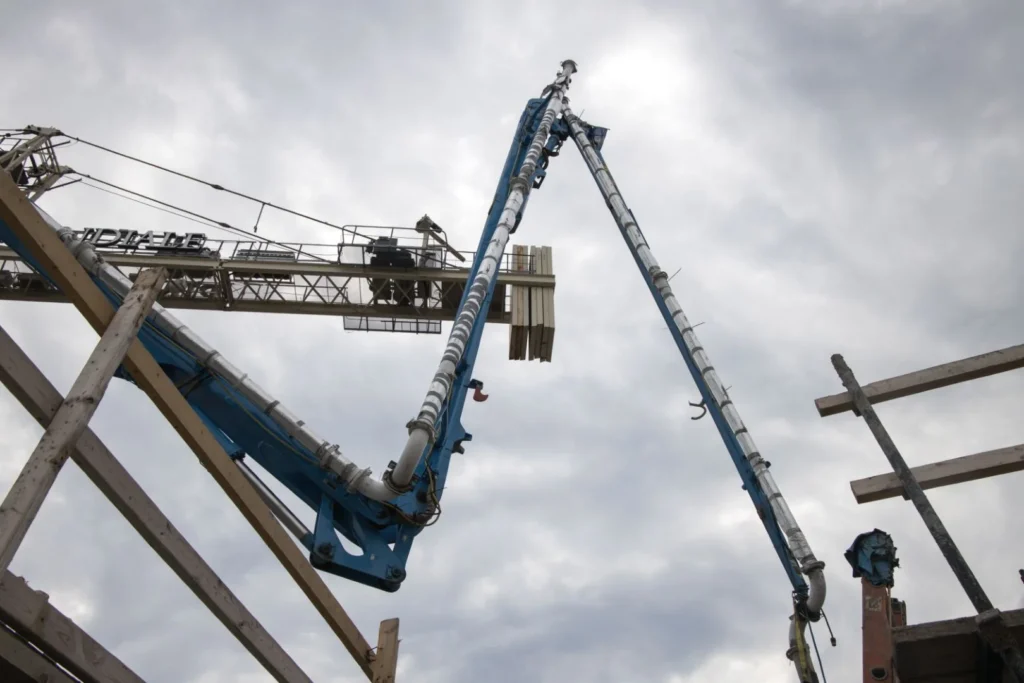
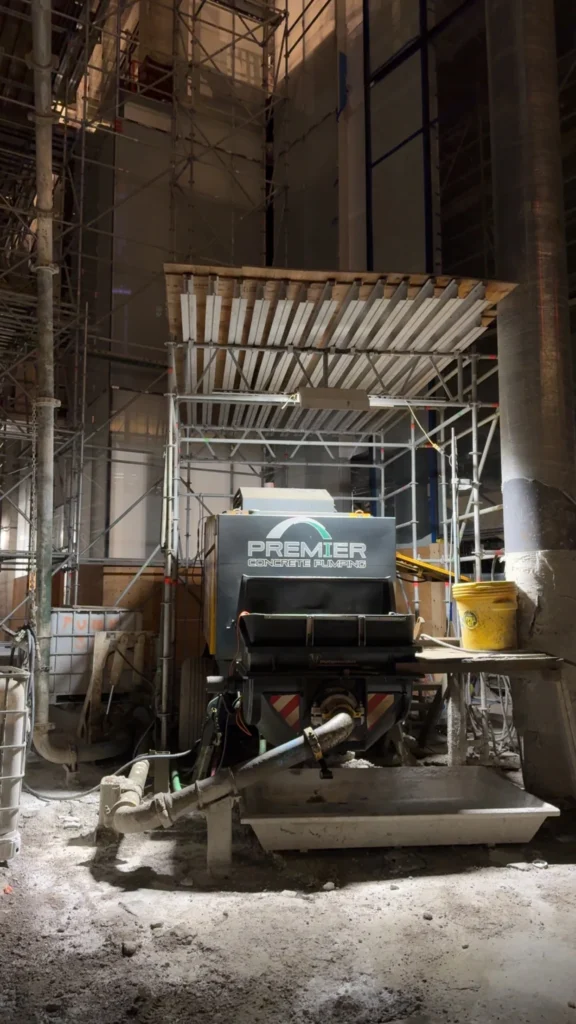
If you’re deciding between pump types for a smaller job, review our Trailer Line Pump services. For larger placements that require reach and speed, our fleet also supports boom placements across complex sites (see: pump setup planning).
Never pour onto wet subgrade, standing water, or water-filled trenches
If the base is saturated or there’s standing water in the trench, you’re starting behind. Water can mix into the concrete at the bottom or push into the pour as you place. That’s how you get weak spots and uneven performance.
If rain is expected a day or two before the pour, cover the base with plastic so it doesn’t soak up water. If your site is already excavated, confirm there’s still a safe, stable route for trucks and hose placement before the pump arrives. This aligns with our general site planning guidance in Concrete Pump Setup for Complex Sites.
What to do if it starts raining during the pour
If rain hits mid-pour, the goal is simple: protect what’s already placed and avoid mixing extra water into fresh concrete.
Rain response checklist
- Pause placement if the rain is more than a light mist.
- Cover the fresh concrete with plastic or tarps (don’t let runoff funnel under the cover).
- Do not finish through rainwater. Don’t trowel water into the slab.
- After rain stops, remove surface water by pushing it off the edge (squeegee/float technique).
- Resume finishing only when the surface stiffens and the water is gone.
If you’re pouring a floor slab, this page pairs well with rainy-day planning: Pouring a Concrete Floor Slab.
How long after pouring concrete can it rain?
Timing matters. If rain hits while concrete is still very fresh, it can damage the surface and disrupt finishing. If the concrete has stiffened and finishing is complete, rain is less likely to cause problems.
As a practical rule on many jobs, once finishing is complete and the surface has started to set (often around 4–8 hours, depending on mix, temperature, and wind), rain tends to be less damaging. But it’s still best to protect the surface if you can.
How to tell if rain damaged the concrete
After the rain stops, check the surface. Most rain damage shows up as a weak top layer.
- Visual check: flaking, peeling, streaks, soft-looking patches
- Scratch test: gently scratch with a screwdriver—compare suspicious areas to a “good” area
- Texture check: dusty or powdery finish can signal a weak surface
- Fine random cracks: craze cracking can appear later
If the slab is structurally fine but the surface is weak, repair options may include grinding and resurfacing. If deeper areas are compromised, replacement may be required.
Rain planning that saves you money
Rain usually increases risk and can increase time on site. The best way to save money is preventing the “messy middle” where crews wait, then rush, then fix surface issues later.
Quick planning checklist
- Check multiple forecasts the day before and morning of the pour
- Have plastic/tarps staged and ready before the truck arrives
- Confirm base is not saturated and trenches are not holding water
- Identify roof runoff/downspouts that can dump water onto fresh concrete
- Make sure the pump route and placement area are clear and stable
For pump planning and line sizing (especially helpful when weather changes force a faster placement plan), see Choosing Concrete Mix and Pump Line Size.
Frequently Asked Questions
Can you pour concrete in light rain?
Sometimes. If it’s a light mist with no pooling, and you can cover the slab immediately, it may be workable. The moment water starts pooling, we stop.
Can you pour concrete in heavy rain?
No. Heavy rain can wash cement paste away, weaken the surface, and ruin the finish. It’s almost always cheaper to delay than to repair later.
Can a line pump operate in the rain?
Yes, in the right conditions. The pump can operate, but the placement area is what determines whether the concrete will be affected. Learn more about Trailer Line Pumps.
How long does concrete need to be protected from rain?
Protect it during finishing and early set. On many pours, that’s often the first 4–8 hours, depending on the job conditions.
What should you never do if rain hits fresh concrete?
Never finish rainwater into the surface and never throw dry cement on top to “soak it up.” That typically creates a weak top layer.
Is pouring indoors different during rainy weather?
Yes. Indoor pours are often protected from rainfall, so rain is more about access and cleanup than concrete quality. Basement pours are a common example (see: floor slab pours).
How do we decide whether to continue or reschedule?
We look at intensity, pooling, timing (fresh vs set), safety, and whether the placement area can be protected reliably.