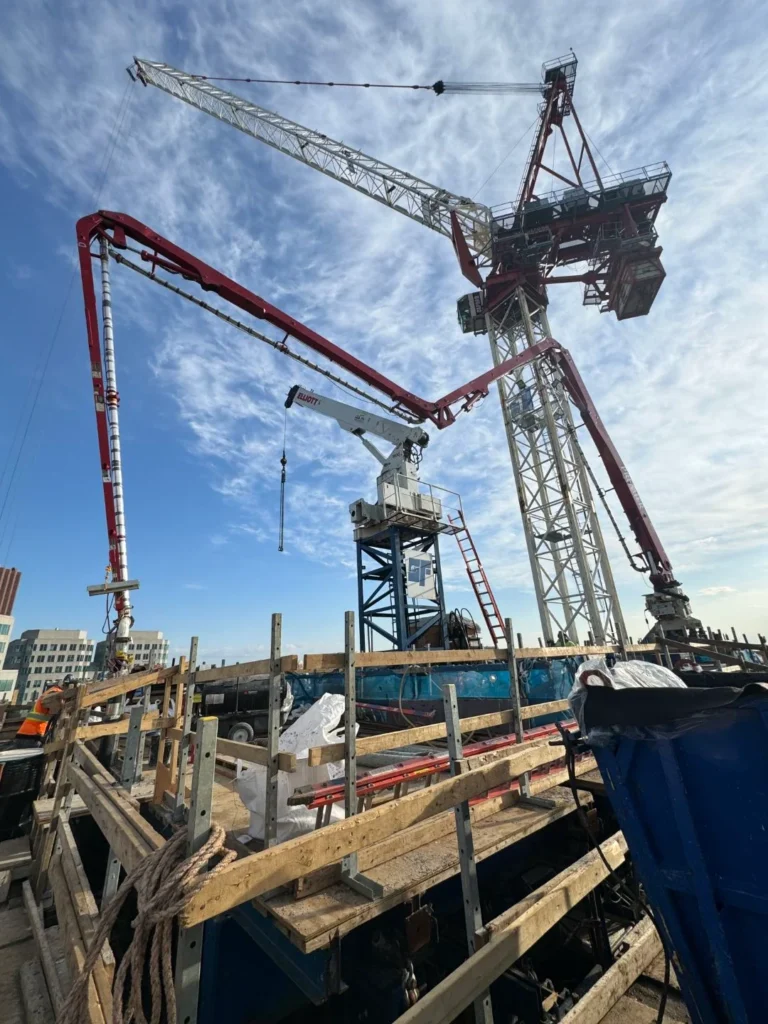
Choosing the right time to book a concrete pump can make or break your pour day. In this guide, we explain how far in advance you should call, what affects scheduling, and how to avoid delays on site based on how we dispatch pumps every week across Ontario.
If you’re planning a pour and want to understand the basics first, read our guide on what concrete pumping is. If you’re deciding between pump types, see trailer and line pump services or use the boom pump selector.
The Short Answer: How Much Notice Should You Give?
For most standard residential or commercial pours, at least 2 days’ notice is ideal.
More notice is always better.
However, that number changes depending on:
- Job complexity
- Pump size required
- Line length
- Time of year
- Weather conditions
- Equipment availability
Standard Jobs (2 Days Notice Is Ideal)
If you’re pouring:
- A basement slab
- A garage floor
- Footings
- A small addition
- A simple foundation wall
Two days’ notice usually works — provided your site is actually ready.
Before booking your pump, your concrete should already be ordered. We are usually the last call you make, not the first.
If you’re still planning your foundation stage, read: Block vs Poured Foundation and What Is an ICF Concrete Foundation.
When You Should Book a Week in Advance
If your project requires:
- 300–800 feet of line
- Multiple operators
- Pre-staging equipment
- Large boom pumps (60m range)
- Specialty equipment like a telebelt
You should give at least one week’s notice.
| Job Type | Suggested Notice | Why |
|---|---|---|
| Basement slab | 2 days | Standard equipment |
| Garage floor | 2 days | Simple staging |
| 300+ ft line | 4–7 days | More hose, more coordination |
| 60m boom | 5–7 days | Limited availability |
| Specialty equipment | 7+ days | Advanced scheduling required |
For large commercial or infrastructure projects, visit: ICI Concrete Pumping and Infrastructure Concrete Pumping.
Busy Season Matters
The busiest months in Ontario are:
- May
- June
- July
- September
- October
During these months, larger pumps get booked quickly. If you need specialty equipment, book early.
Weather Changes Everything
Concrete is weather sensitive. If rain, snow, or freezing temperatures are coming:
- Monitor the forecast
- Communicate delays early
- Don’t wait until the morning of the pour
For weather-related planning tips, read Best Practices for Pouring Concrete in Ontario.
Who Should You Call First: Ready Mix or Pump?
Call your ready mix supplier first.
We need to know your confirmed concrete time before we schedule your pump.
| Step | Action |
|---|---|
| 1 | Confirm site prep |
| 2 | Book finishers |
| 3 | Order ready mix |
| 4 | Book Premier Concrete Pumping |
How Flexible Is Scheduling?
We operate multiple pumps of the same size, which allows us to adjust when needed. But flexibility works best when communication is early.
If your job involves staging challenges, read: Concrete Pump Setup for Complex Sites.
Quick Decision Chart
| Situation | Book Now? | Wait? |
|---|---|---|
| Concrete ordered, forms ready | Yes | |
| Forms still being built | Wait | |
| Need 600+ ft of line | Yes (early) | |
| Peak summer month | Yes (early) | |
| Unsure of concrete time | Wait |
How far in advance should I book a concrete pump?
For most jobs, 2 days is ideal. Complex or specialty jobs should be booked 1 week in advance.
Should I book ready mix or pump first?
Book ready mix first. We need your concrete time to schedule correctly.
What information should I have ready?
-
Address
-
What you’re pouring
-
Cubic meters
-
Concrete time
-
Pump size (if known)
-
Any special access notes
What if the weather changes?
Call as early as possible to reschedule. Early notice allows flexibility.
What if I don’t know what pump I need?
We’ll help you determine that. You can also review our equipment page or contact dispatch directly.
Can you help find ready mix suppliers?
In many areas, yes. We have relationships across Southern Ontario.