Most general contractors do not set out to plan a multi-pump job. It usually comes up mid-conversation with the pumping contractor once the volume, the mix, or the site plan gets laid out. By that point there may only be a day or two left to arrange it. Knowing the signals in advance, before you tender or schedule the pour, means you are never scrambling to add a second pump at the last minute.
This article breaks down what actually pushes a job from a single pump to a multi-pump setup, what to expect once you get there, and how it affects cost and scheduling.
What “More Than One Pump” Actually Means
There is not just one version of a multi-pump job. In practice it comes down to three different setups:
- Simultaneous multi-pump: two or three pumps working different sections of the same large pour at the same time, each with its own concrete supply.
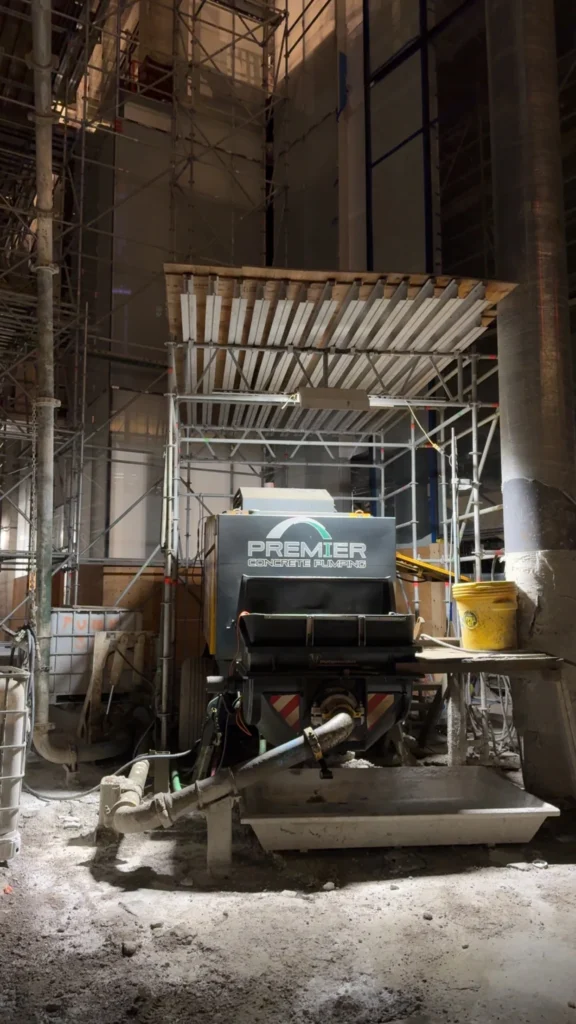
- Standby or backup pump: one pump actively placing concrete while a second sits on site in reserve, ready to step in if something goes wrong.
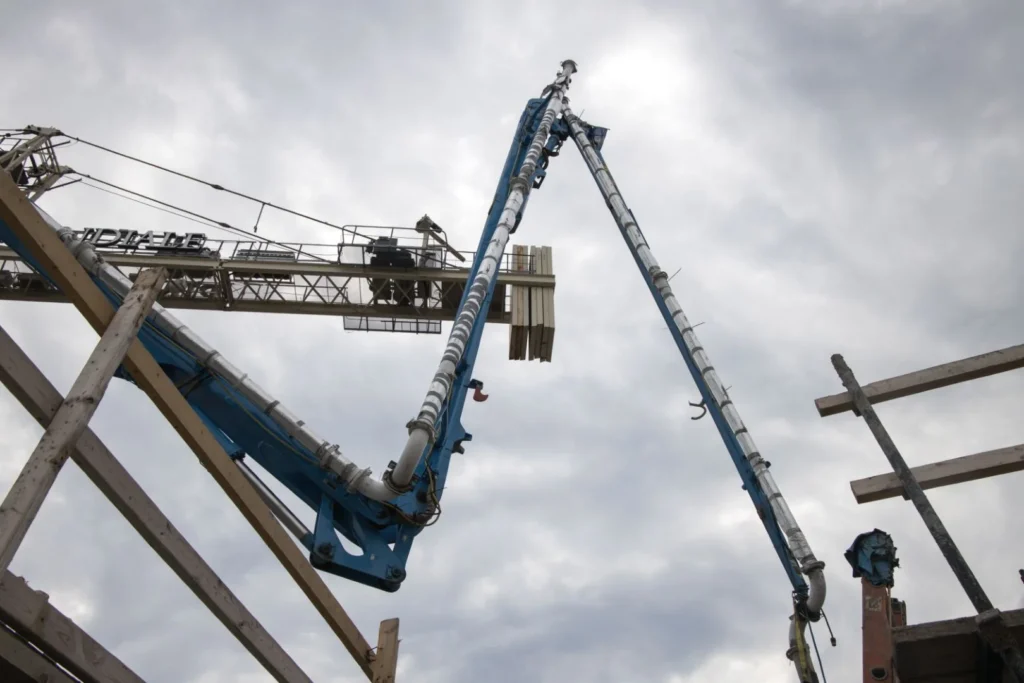
- Pump-to-pump relay: one pump feeds concrete into a second pump, which then places it, typically used where a single pump cannot reach or access the pour area on its own.
Which setup applies depends less on the type of project and more on the volume you are pouring and the access you have on site.
The Signal That Matters Most: Pour Volume
Volume is the single biggest factor. As a rule of thumb, pours in the range of 200 cubic metres and up are where multi-pump conversations start. Below that, a single pump can usually handle the job on its own.
Mix design plays a role too. High-volume pours using a fast-drying concrete need to be placed quickly and covered before the mix starts to set. That urgency is often what pushes a job toward simultaneous pumping rather than a single pump working the site alone.
Project Types Where This Comes Up
Multi-pump setups are not limited to one kind of project. They show up across:
- Large industrial and warehouse slabs
- Bridge work and infrastructure projects
- Barn slabs and other large agricultural pours
- High-rise starts, where covering a large floor plate quickly matters
There is no single category that owns this. It is a question of volume and access on any given project, whether that project falls under commercial concrete pumping or a large residential or agricultural pour.
Site Access Can Force the Decision Either Way
A wide open site with room to set up from multiple angles can support two or three pumps running at once, each covering its own section. A tight or restricted-access site may only physically fit one pump. In that case, the second pump often becomes a standby unit off to the side rather than an active second pump, still available if the primary pump has an issue, but not pumping simultaneously.
What to Expect Once You Know You Need It
Once a job is identified as a multi-pump job, a few things change from a standard single-pump order:
- Lead time: plan for roughly 48 hours ahead of a standard order, more if the site setup is tight and needs to be worked out in advance.
- Crew: anywhere from one to four operators depending on the setup. On a standby setup, the second operator will often park their boom and assist the active crew rather than sit idle.
- Mix design: must be identical across pumps working the same continuous slab. It can differ if the pumps are working separate structural elements, such as a foundation on one side and walls on the other.
- Coordination: operators stay in contact by radio to keep pour flow and finishing crews synced across the site, especially on large slabs where one side can get ahead of the other.
- Contingency: if one pump goes down mid-pour, the other keeps working while a replacement is dispatched, so the pour does not have to stop.

Cost: What Changes and What Doesn’t
Two pumps running simultaneously on the same job are priced the same as any standard order, there is no premium simply for running more than one pump at a time. A standby pump sitting in reserve, not actively pumping, is billed at a reduced standby rate rather than a full pumping rate.
Talk to Your Pumping Contractor Early
If your pour is pushing 200 cubic metres, uses a fast-setting mix, or the site has limited access, it is worth raising multi-pump planning with your pumping contractor before you tender or lock in a schedule. Premier Pumping runs simultaneous multi-pump and standby setups regularly across large slabs, infrastructure, and high-rise starts throughout Ontario, with the fleet depth to size the job correctly the first time.
Contact Premier Pumping to talk through your project’s volume, mix, and site access before you schedule your pour.